BYD Surges Ahead as Tesla Stumbles and Ford Rethinks Strategy in a Widening US China EV Divide
The global electric vehicle race is increasingly tilting in China’s favour, with the gap between Chinese and American manufacturers becoming harder to ignore. Once defined by head to head competition, the contest is now widely seen as uneven, as Chinese companies accelerate innovation and scale while US automakers struggle with cost pressures, slower adoption and strategic uncertainty.
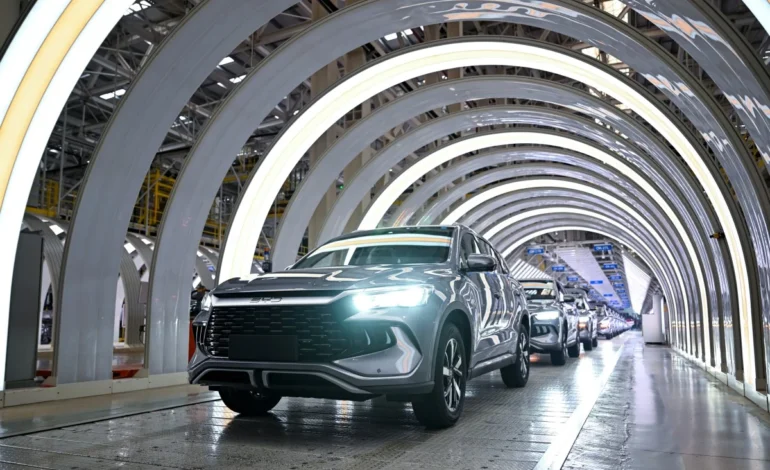
China’s largest electric vehicle maker BYD has emerged as a clear winner in this shifting landscape. Backed by vast domestic demand, an integrated supply chain and aggressive pricing, the company has expanded rapidly both at home and overseas. Its ability to control everything from battery production to final assembly has allowed it to move faster and cheaper than most Western rivals, reinforcing China’s position as the world’s EV manufacturing hub.
In contrast, Tesla, once viewed as the uncontested global leader, is facing mounting challenges. Sales growth has slowed in key markets, price cuts have squeezed margins, and competition from Chinese brands has intensified, particularly outside North America. While Tesla remains a major force in technology and branding, its dominance no longer looks assured as rivals flood the market with lower cost and increasingly sophisticated models.
The changing balance is now being openly acknowledged within the US auto industry. The chief executive of Ford recently admitted that American manufacturers are not currently competing on equal terms with China’s EV producers. Speaking candidly, he said Chinese companies are effectively dominating the global electric vehicle landscape, especially beyond their home market, a reality that has forced Ford to reassess its own approach.
This reassessment has led Ford to pivot its EV strategy, placing greater emphasis on hybrid vehicles and more affordable electric models rather than chasing volume at any cost. The shift reflects broader concerns within Detroit about profitability, supply chain resilience and consumer demand, particularly in the face of rising interest rates and uneven charging infrastructure across the United States.
The broader implications extend beyond individual companies. For the United States, falling behind in electric vehicles raises questions about industrial competitiveness and long term energy transition goals. Years of policy support have helped boost EV adoption, but fragmented regulation, higher labour costs and dependence on global supply chains have limited the pace of progress compared with China.
Meanwhile, China continues to leverage scale, state support and technological learning to strengthen its lead. Chinese EV makers are expanding into Europe, Southeast Asia and parts of Latin America, reshaping global markets and putting pressure on established brands.
As the EV transition enters a more mature phase, the narrative is shifting from promise to execution. China’s manufacturers appear better positioned for the current reality of fierce price competition and rapid iteration, while US automakers face difficult choices about focus and investment. The widening gap suggests the global EV race is no longer just about who started first, but who can adapt fastest to a far more demanding marketplace.