China and Canada Signal Thaw in Trade Relations as US Tariffs Reshape Global Ties
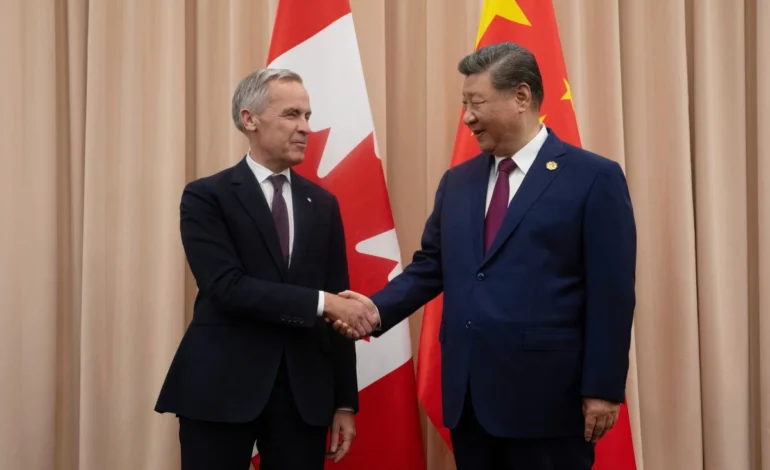
China and Canada appear to be moving toward a reset in their strained trade relationship, as leaders in both countries reassess their economic strategies in response to shifting global conditions and the impact of renewed US tariffs. The change in tone comes as Canadian Prime Minister Mark Carney visits Beijing this week, opening the door to renewed dialogue after several years of diplomatic and commercial tension.
Relations between Canada and China deteriorated sharply in the late 2010s, driven by high-profile political disputes, trade restrictions, and growing alignment between Ottawa and Washington on security and technology issues. Since then, bilateral trade has continued but largely without momentum, as mistrust limited deeper cooperation.
The current shift is being driven in part by changes in the global trade environment. The reintroduction and expansion of tariffs under US President Donald Trump have prompted many US partners to reconsider their reliance on the American market. For Canada, whose economy is deeply integrated with the United States, the renewed tariff pressure has revived debate about diversification and reducing vulnerability to unilateral US trade actions.
China, meanwhile, has been seeking to stabilise and broaden its trade relationships amid a more fragmented global economy. Chinese officials have repeatedly signalled openness to pragmatic engagement with developed economies willing to separate economic cooperation from political disagreements. Canada, with its resource-rich economy and advanced industrial base, fits that profile.
Trade between the two countries remains substantial. Canada is a key exporter of commodities such as crude oil, copper, iron ore, and agricultural products to China, while Chinese manufactured goods and technology products play a significant role in Canadian supply chains. Business groups on both sides argue that the economic logic for cooperation has never disappeared, even during periods of political strain.
Carney’s visit to Beijing is being closely watched by diplomats and investors as a potential turning point. While no major agreements have been announced in advance, officials say the goal is to restart structured talks and rebuild channels that have been largely dormant. Observers say even modest progress, such as working-level dialogues on market access or regulatory barriers, would mark a meaningful change in direction.
Canadian officials have framed the outreach as part of a broader effort to pursue a more independent and diversified trade policy. While the United States remains Canada’s largest and most important trading partner, policymakers increasingly acknowledge the risks of overdependence, particularly when trade policy is used as a political tool.
For China, improving ties with Canada could also carry symbolic value. It would demonstrate that Beijing can rebuild relationships with Western economies despite ongoing tensions with the United States and parts of Europe. Analysts say China is likely to focus on areas of mutual benefit while avoiding sensitive issues that previously derailed relations.
Challenges remain significant. Political mistrust has not disappeared, and public opinion in Canada remains cautious about closer engagement with China. Issues such as human rights, national security, and foreign interference are still part of the bilateral conversation and could resurface as obstacles.
Nevertheless, the renewed contact reflects a shared recognition that the global trade landscape is changing. As protectionism rises and traditional alliances are tested, middle powers like Canada are looking for flexibility, while China is seeking stability. Whether this moment leads to a durable reset or only limited cooperation will depend on how both sides manage their differences alongside their economic interests.