Prosecutors Seek Death Sentence for Former South Korean President Over Failed Martial Law Bid
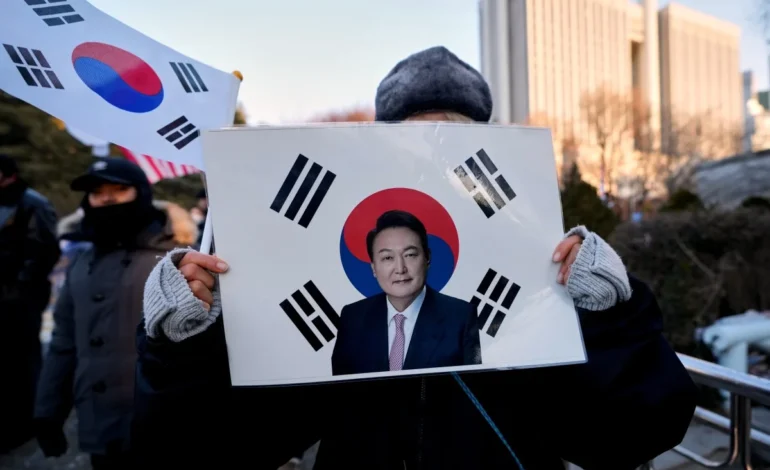
South Korean prosecutors have demanded the death penalty for former president Yoon Suk-yeol, accusing him of leading a rebellion through his short-lived attempt to impose martial law in December 2024. The request was made on Tuesday by an independent counsel during closing arguments, bringing a dramatic chapter in South Korea’s political history closer to a legal conclusion.
The charges stem from Yoon’s decision to declare martial law late last year, a move that lasted only a few hours but triggered widespread political turmoil. Prosecutors argue that the declaration constituted an unconstitutional attempt to use military authority to override civilian governance, even though it was swiftly reversed. They described Yoon as the central figure behind what they called a deliberate effort to undermine the constitutional order.
According to the prosecution, intent is the key issue rather than duration. They told the court that the brevity of the martial law declaration does not diminish its seriousness, as the act itself demonstrated willingness to suspend democratic norms and concentrate power unlawfully. In their view, such actions meet the legal threshold for rebellion under South Korean law, which allows for the death penalty in the most severe cases.
Yoon was impeached by parliament shortly after the incident, following an emergency session in which [+]
lawmakers condemned the declaration as a direct threat to democracy. He was subsequently detained and put on trial, becoming one of the few former South Korean leaders to face criminal proceedings so soon after leaving office. The case has drawn intense public attention, reopening debates about presidential power and accountability.
During the trial, Yoon has denied all charges. His legal team argues that the martial law declaration was symbolic rather than operational, claiming it was intended to draw public attention to what he described as obstruction and misconduct by the opposition. They insist there was no concrete plan to deploy troops broadly, arrest political rivals, or suspend civil liberties, and therefore no rebellion in practice.
South Korea technically retains capital punishment, but executions have not been carried out for decades, placing the country under an informal moratorium. Even so, the prosecution’s demand is highly significant. Legal analysts say calling for the death penalty sends a strong signal about how seriously the state views the alleged abuse of presidential authority, particularly given the country’s history of authoritarian rule during the twentieth century.
Public reaction to the trial has been sharply divided. Many South Koreans view the martial law attempt as an alarming reminder of past military dictatorships and argue that severe punishment is necessary to deter future leaders from similar actions. Others believe the prosecution’s stance is excessive and politically charged, warning that criminalising controversial political decisions could deepen polarization.
The case has also prompted broader discussion about safeguards within South Korea’s democratic system. Constitutional scholars say the episode exposed vulnerabilities in how emergency powers are defined and constrained, even in a mature democracy. Some lawmakers have already called for legal reforms to further limit the scope of martial law and clarify oversight mechanisms.
International observers are watching closely, noting that South Korea is one of Asia’s most prominent democracies. How it handles the trial of a former president accused of rebellion could shape perceptions of its commitment to the rule of law and civilian control of the military.
The court is expected to deliver its verdict in the coming weeks. While the death penalty request does not guarantee such a sentence, the outcome will carry lasting implications for South Korea’s political landscape and for how future leaders interpret the limits of their authority in times of crisis.