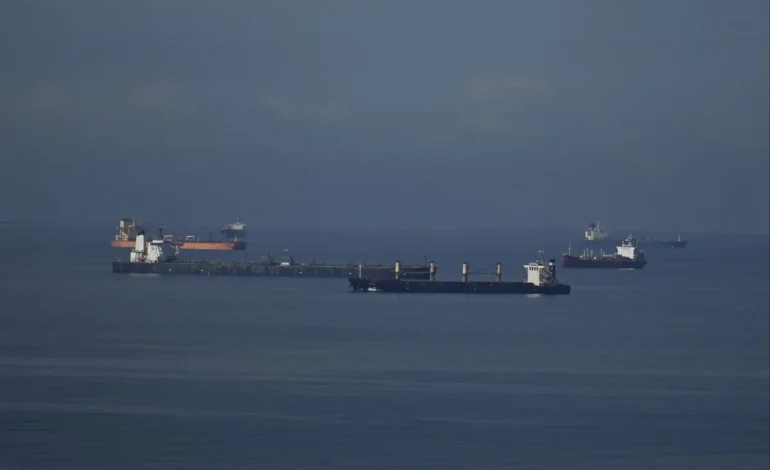
Taiwan and US Begin Joint Production of 155mm Artillery Shells as Supply Risks Grow
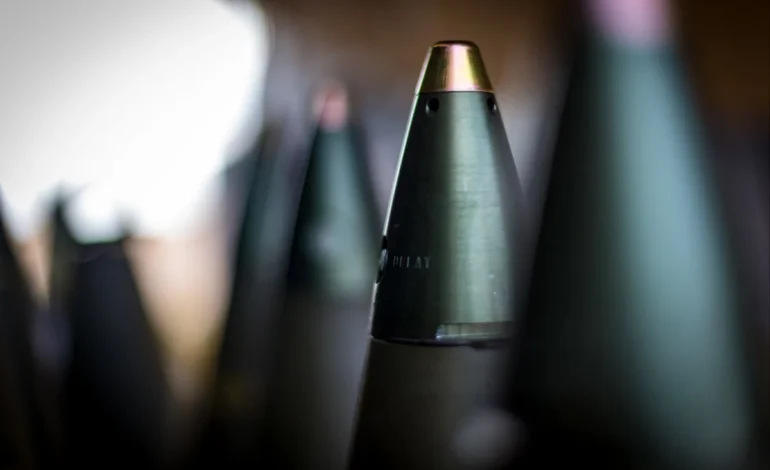
Taiwan has begun early-stage joint production of 155mm artillery shells with the United States, marking a significant step in efforts to strengthen ammunition resilience amid fears of a potential blockade or high-intensity conflict with China. The move reflects growing concern in Taipei about the vulnerability of supply chains in wartime and the need to ensure sustained access to critical munitions.
Taiwan’s defence ministry said on Monday that cooperation with Washington had moved into a new phase, with both sides launching joint production of a new type of 155mm howitzer ammunition. The calibre has become a global benchmark for modern artillery, widely used by Nato forces and proven essential in recent conflicts, including the war in Ukraine.
Officials in Taipei have increasingly focused on stockpiling and localising production of key weapons and ammunition as Beijing steps up military pressure on the island. Large-scale Chinese military drills, frequent air and naval patrols around Taiwan, and explicit warnings from Beijing have reinforced concerns that a future conflict could involve an attempt to cut Taiwan off from external resupply.
The decision to co-produce artillery shells with the United States is aimed at reducing dependence on overseas deliveries that could be disrupted in a crisis. Defence analysts say ammunition consumption in modern warfare is far higher than many governments previously anticipated, and Taiwan’s planners have been closely studying lessons from Ukraine, where shortages of artillery shells have repeatedly shaped battlefield outcomes.
Under the joint production arrangement, Taiwanese firms are expected to work alongside US partners on manufacturing processes, quality control, and supply chain integration. While officials did not disclose production volumes or timelines, they described the project as an important foundation for expanding domestic defence manufacturing capacity over time.
The United States remains Taiwan’s most important security partner and arms supplier, despite the absence of formal diplomatic relations. Washington is legally bound under the Taiwan Relations Act to provide the island with defensive weapons, and recent years have seen a steady increase in arms sales, training cooperation, and logistical coordination.
For Taiwan, the emphasis is shifting from simply acquiring advanced weapons to ensuring those systems can be sustained in a prolonged conflict. Ammunition, spare parts, and maintenance capacity are now seen as just as critical as headline platforms such as fighter jets or missile systems.
The 155mm shell plays a central role in ground-based defence, particularly in scenarios involving amphibious landings or attempts to seize key terrain. Taiwanese military planners view artillery as a vital component of layered defence, capable of slowing or deterring invading forces while other assets are mobilised.
Beijing has repeatedly condemned military cooperation between Taipei and Washington, accusing the United States of interfering in China’s internal affairs and encouraging separatism. China claims Taiwan as its territory and has not ruled out the use of force to bring the island under its control.
Chinese officials have not commented directly on the joint production announcement, but similar moves in the past have drawn sharp criticism and warnings. Taipei, however, insists that strengthening its defensive capabilities is necessary to preserve peace and stability by raising the cost of any potential aggression.
The initiative also reflects broader changes in global defence planning. Supply chain disruptions during the pandemic and the strain on Western arsenals caused by support for Ukraine have prompted many governments to rethink reliance on just-in-time weapons production. Joint manufacturing and localised capacity are increasingly viewed as essential.
While the current project is described as early-stage, analysts say it could pave the way for deeper industrial cooperation between Taiwan and the United States. Future expansions could include other types of ammunition or components, further embedding defence ties between the two sides.
For Taipei, the message is clear. Ensuring that ammunition can be produced and replenished even under extreme pressure is now a strategic priority. The joint 155mm shell production effort signals a shift toward long-term resilience rather than short-term procurement, as Taiwan prepares for an increasingly uncertain security environment.