Why China’s Electric Vehicle Supply Chain Is Becoming Unmatched Worldwide
Building the world’s most complete EV ecosystem
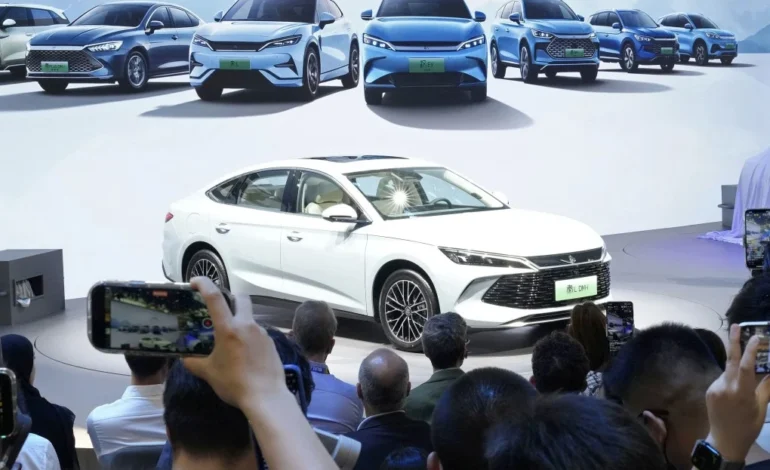
China’s electric vehicle rise is not only about fast growing sales or competitive pricing. At its core lies a supply chain that has quietly become the most comprehensive and integrated in the world. From raw material processing to final vehicle assembly China has built an ecosystem that few countries can rival. This depth gives Chinese manufacturers speed flexibility and cost control that increasingly define global EV competition.
Control from minerals to manufacturing
A major advantage of China’s EV industry is its command over critical raw materials. Chinese firms have invested heavily in lithium nickel cobalt and graphite supply chains both domestically and overseas. These investments ensure stable access to essential inputs while reducing exposure to global price shocks. Processing and refining capabilities are also concentrated in China allowing manufacturers to capture more value before components even reach factories.
Battery dominance as a strategic pillar
Batteries remain the most expensive and strategic part of an electric vehicle and China dominates this segment. Battery makers operate at massive scale supported by close relationships with automakers. This integration allows rapid customization cost reduction and faster adoption of new chemistries. Improvements in energy density safety and charging speed are often commercialized first within China’s domestic market before spreading globally.
Manufacturing efficiency at unmatched scale
China’s EV manufacturing infrastructure has matured through years of intense competition. Factories are highly automated yet flexible capable of switching models quickly to respond to market demand. Dense industrial clusters reduce logistics costs and shorten development cycles. Suppliers component makers and software developers often operate within the same regions enabling real time coordination that improves efficiency and lowers production risk.
Software and hardware integration
Modern electric vehicles rely as much on software as on mechanical components and China’s supply chain reflects this shift. Vehicle operating systems smart cockpits and driver assistance features are developed alongside hardware rather than added later. This tight integration allows faster innovation and smoother user experiences. It also enables frequent over the air updates extending vehicle lifespans and strengthening brand loyalty.
Policy alignment and industrial coordination
Government policy has played a role by aligning infrastructure development industrial standards and talent cultivation. Charging networks logistics hubs and research centers have been developed in parallel with manufacturing growth. Rather than focusing solely on output volumes policy now supports quality reliability and global competitiveness. This coordinated approach reduces bottlenecks and supports long term industry stability.
Global consequences of supply chain strength
China’s unmatched EV supply chain is reshaping global auto markets. Foreign automakers increasingly rely on Chinese components batteries and software even when producing vehicles elsewhere. This dependency highlights the challenge other regions face in replicating such an integrated system. Efforts to diversify supply chains may take years and significant investment while China continues to refine its advantage.
The road ahead for China’s EV leadership
As global competition intensifies China’s EV supply chain will remain a decisive asset. Continued innovation sustainability improvements and international partnerships will determine how this strength is perceived abroad. What is clear is that China has moved beyond being just a manufacturing base. It now sets the pace for how electric vehicles are designed built and delivered worldwide.