China’s Chip Ambitions: Competing with Global Giants

China’s ambitions in the semiconductor industry have moved from aspiration to action, reflecting the country’s desire to compete directly with global giants like Intel, TSMC, and Samsung. Semiconductors are the backbone of modern technology, powering everything from smartphones and computers to electric vehicles and industrial machinery. For China, developing a strong domestic chip industry is not just an economic goal, it is a matter of national security and technological sovereignty.
The centerpiece of China’s strategy is massive investment in research and development. Domestic chipmakers such as SMIC, Yangtze Memory Technologies (YMTC), and HiSilicon are aggressively pursuing innovation in logic chips, memory, and system-on-chip (SoC) design. While China currently lags in the production of the most advanced 3-nanometer chips, progress in 14- to 28-nanometer nodes has allowed Chinese companies to serve critical sectors, including consumer electronics, automotive, and telecommunications.
China’s chip ambitions are closely tied to government policy and funding. National initiatives, such as the “Made in China 2025” plan and the National Integrated Circuit Industry Investment Fund, provide capital and strategic direction for domestic chipmakers. These programs reduce financial risks associated with the high-cost, high-tech semiconductor industry, which can require billions of dollars to build fabs and develop next-generation processes. This strong state support has enabled Chinese companies to scale rapidly and invest in cutting-edge technologies that were previously the domain of foreign competitors.
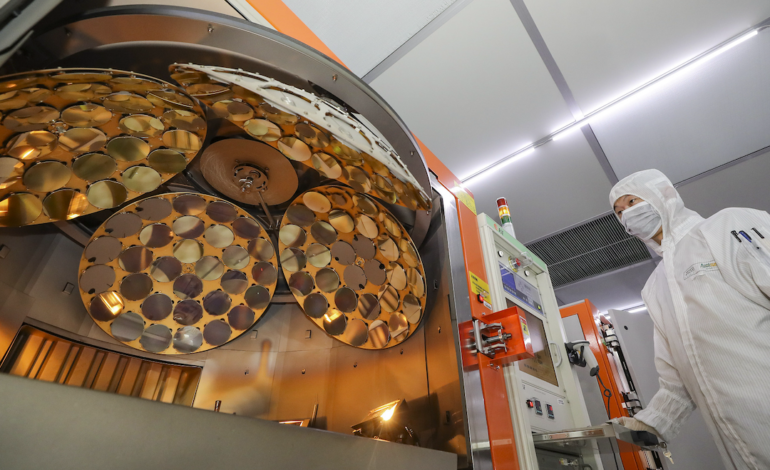
Another key factor in China’s rise is supply chain integration. China has worked to localize production of wafers, lithography equipment, and other critical semiconductor components. While certain advanced tools remain dominated by international companies, domestic innovation is steadily narrowing the gap. This vertical integration not only lowers costs but also ensures more control over production, a vital factor amid global trade restrictions and supply chain disruptions.
China’s chip ambitions also extend to global competitiveness. Chinese companies are exporting chips, licensing technology, and participating in international partnerships. For example, Huawei’s HiSilicon chips have been widely adopted in telecommunications and networking products. Meanwhile, Chinese memory chipmakers are improving yields and performance, making their products viable alternatives to established brands. These developments signal that China is not only aiming for self-reliance but also seeking a significant share of the global market.
The road ahead is challenging. Advanced semiconductor manufacturing requires extreme precision, cutting-edge materials, and continuous innovation. However, China’s combination of government support, strategic investment, and talent development has positioned it as a formidable competitor. By steadily advancing its capabilities, China is reshaping the global semiconductor landscape and influencing the strategies of traditional industry leaders.
In conclusion, China’s chip ambitions reflect a deliberate and multifaceted approach to technological independence and market influence. Through investment in R&D, supply chain localization, and international engagement, China is increasingly capable of challenging global semiconductor giants. As the industry evolves, China’s growing presence will continue to have profound implications for global technology, trade, and innovation.