From Blueprint to Wafer: Understanding China’s Fab Revolution
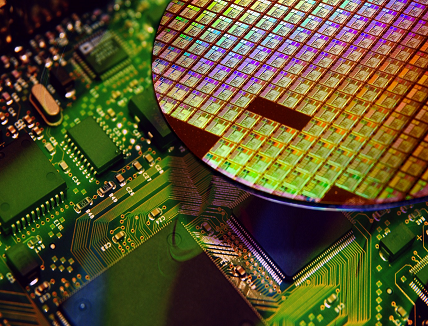
China’s semiconductor industry is in the midst of a fab revolution, transforming the country from a chip importer into a global manufacturing powerhouse. At the heart of this transformation are the fabrication plants commonly called fabs, where raw silicon is turned into the complex microchips that power modern technology. Understanding this process offers insight into China’s growing influence in the global semiconductor market.
The journey from blueprint to wafer begins with design. Engineers develop chip schematics that define circuits, logic gates, and memory layouts. These designs are then converted into masks, which guide the photolithography process that prints the intricate patterns onto silicon wafers. Companies like SMIC and Hua Hong Semiconductor have invested heavily in this stage, ensuring that domestic fabs can produce a wide range of chips, from logic and memory to analog and specialized semiconductors.
Once a blueprint is finalized, fabs use advanced manufacturing processes to produce wafers. Ultra-clean environments, often with fewer than one particle per cubic meter, are critical to avoid defects. Sophisticated machines deposit layers of materials, etch precise patterns, and integrate billions of transistors onto a single chip. Chinese fabs are increasingly adopting automation and AI-assisted monitoring to improve efficiency and yield, reducing waste and accelerating production timelines.
China’s fab revolution is fueled by strategic investment and government support. Multi-billion-dollar initiatives, such as the National Integrated Circuit Industry Investment Fund, provide capital for new fabs and equipment purchases. Regional governments supply land, utilities, and workforce training programs to accelerate operations. This alignment between policy and industry allows China to rapidly scale its semiconductor capacity and compete internationally.
A key component of the revolution is technological self-reliance. While cutting-edge tools like extreme ultraviolet (EUV) lithography remain largely restricted, Chinese fabs are innovating alternative methods to improve chip performance. Companies are also investing in domestic equipment production, advanced materials, and R&D partnerships with universities, creating an ecosystem that supports long-term growth and innovation.
The fab revolution also extends beyond production. By building a robust supply chain, from raw silicon and chemicals to wafers and packaging, China is reducing dependence on foreign suppliers. This integration strengthens resilience against global disruptions and positions China as a central player in the global semiconductor network.
The global impact of China’s fab revolution is already evident. Increased domestic chip production supports the country’s EV industry, consumer electronics, telecommunications, and industrial automation sectors. International competitors must adjust to China’s growing capabilities, while global supply chains increasingly recognize the importance of Chinese fabs in meeting demand.
In conclusion, China’s fab revolution, from blueprint to wafer, demonstrates a strategic and multifaceted effort to secure technological independence and global influence. Through advanced manufacturing, investment in innovation, and supply chain integration, Chinese fabs are not just producing chips, they are redefining the landscape of global semiconductor manufacturing.