South Korea Signals Balanced Reset in Regional Diplomacy
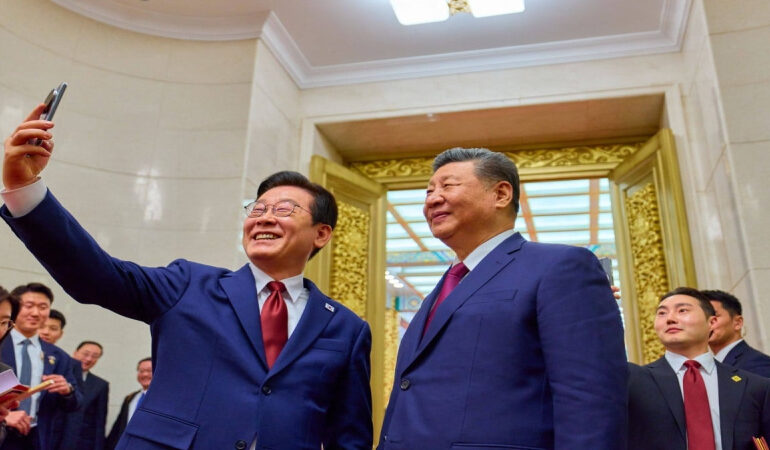
South Korea’s recent back to back engagements with China and Japan point to a deliberate effort to recalibrate regional relationships at a time of heightened geopolitical strain in Northeast Asia. President Lee Jae Myung’s visits underscored a policy approach centered on pragmatism, seeking stability through dialogue rather than alignment with any single bloc. In discussions with Japanese leaders, Lee emphasized the need for cooperation amid what he described as turbulence in the global political and trade environment. His remarks highlighted a belief that regional challenges require flexible coordination rather than rigid positioning, particularly as economic interdependence deepens across Asia. The timing of the visits suggested an intent to place relations with both neighbors on parallel tracks, signaling that Seoul views engagement with China and Japan as mutually necessary rather than mutually exclusive.
The contrast in messaging between Seoul and Tokyo during the Japan visit illustrated the complexity of this balancing act. While Lee spoke openly about the importance of maintaining cooperation with both China and Japan, Japanese leadership focused more narrowly on trilateral coordination with the United States. This divergence reflects underlying tensions driven by differing strategic priorities, particularly around security and regional alignment. South Korea has so far avoided taking a confrontational stance as frictions between Beijing and Tokyo intensify, mindful of the potential spillover effects on its own economic and security interests. Lee’s approach suggests an awareness that overt alignment could constrain Seoul’s diplomatic flexibility at a moment when regional supply chains and security arrangements are under pressure.
Lee’s earlier visit to Beijing reinforced this positioning, with discussions centered on restoring momentum to bilateral relations after years of strain. Economic considerations featured prominently, as both sides acknowledged the costs of prolonged friction in areas such as technology, manufacturing, and trade. South Korea’s reaffirmation of its long held policy positions was paired with an emphasis on regional stability and economic continuity. Analysts note that this strategy reflects an effort to reduce uncertainty for domestic industries exposed to shifts in regional policy, particularly as export controls and trade restrictions reshape industrial planning across Asia.
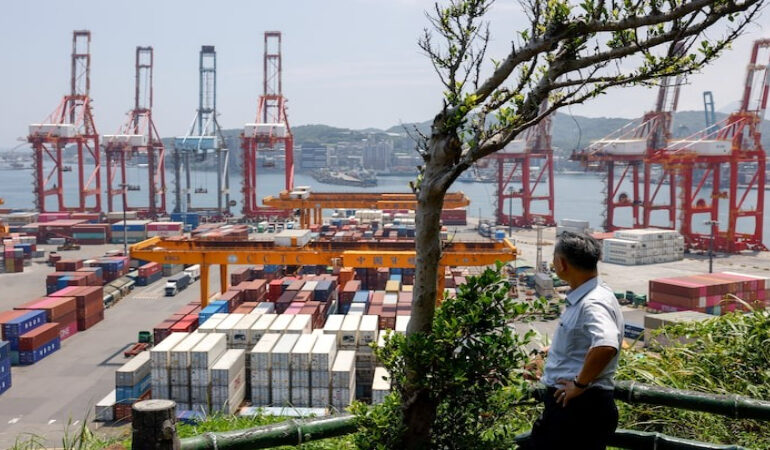
The broader regional context adds urgency to Seoul’s diplomatic outreach. Rising tensions between China and Japan, including disputes linked to security and trade controls, have introduced new risks for interconnected economies. South Korea’s semiconductor, battery, and advanced manufacturing sectors are especially sensitive to disruptions in regional supply chains. By promoting dialogue and cooperation among all major players, Seoul appears to be positioning itself as a stabilizing actor seeking to mitigate the economic fallout of geopolitical rivalry. The approach highlights how mid sized powers are adapting foreign policy strategies to navigate an increasingly fragmented regional order, where economic security and diplomacy are tightly intertwined.