US and China Signal Trade Thaw at Davos
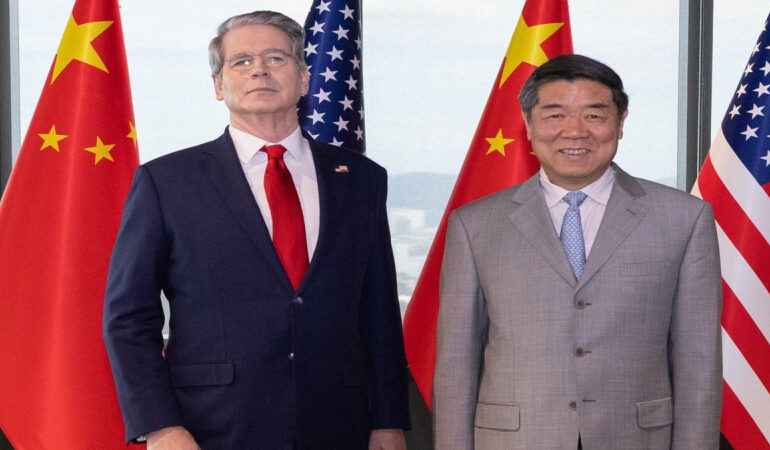
Senior economic officials from the United States and China held fresh discussions on the sidelines of the World Economic Forum in Davos, offering cautious signals of stabilization after a prolonged period of trade friction. US Treasury Secretary Scott Bessent said he met with Chinese Vice Premier He Lifeng, underscoring the continued role of direct dialogue between the world’s two largest economies. The meeting comes against a backdrop of sharply elevated tariffs and strained commercial ties that have weighed on global markets and supply chains. Both sides have emphasized the importance of maintaining communication channels even as strategic rivalry persists. The Davos encounter reflects a shared interest in preventing further escalation, particularly as economic uncertainty and geopolitical pressures continue to ripple through international trade and investment flows.
The talks follow a series of meetings over the past year that marked a shift away from open confrontation toward structured engagement. Previous sessions held in multiple global capitals laid the groundwork for incremental progress on specific trade issues, including agricultural exports and access to critical materials. Bessent indicated that discussions have produced tangible improvements, citing developments related to soybeans and rare earth elements. These sectors carry strategic significance, with agriculture tied closely to domestic political considerations in the United States and rare earths playing a central role in advanced manufacturing and energy technologies. Progress in these areas suggests both governments are prioritizing practical outcomes that can deliver economic benefits while avoiding politically sensitive concessions.
Despite the more constructive tone, the broader trade relationship remains constrained by high tariff levels and unresolved disputes. Duties imposed during earlier phases of the trade conflict remain in place, keeping effective tariff rates at historically elevated levels. Businesses on both sides continue to face uncertainty over market access, regulatory treatment, and long term policy direction. The Davos meeting did not signal an immediate rollback of tariffs but rather an effort to manage tensions and identify areas where limited cooperation is possible. For global markets, even modest steps toward predictability are closely watched, as US China trade dynamics exert outsized influence on commodity prices, manufacturing decisions, and cross border capital flows.
The choice of Davos as a venue also carries symbolic weight. The World Economic Forum has long served as a platform for signaling policy intent to a global audience of political and business leaders. By highlighting ongoing dialogue there, Washington and Beijing appear intent on reassuring partners and investors that communication remains intact. The meeting reinforces a pattern of cautious engagement that prioritizes stability over dramatic breakthroughs. As economic pressures mount at home and abroad, both sides face incentives to contain trade disputes even as strategic competition deepens. The trajectory of these talks will remain a key variable shaping global economic expectations in the months ahead.