China Weighs Invitation to Trump-Led Global Peace Initiative
China has confirmed it was invited by the United States to participate in a new global peace initiative proposed by US President Donald Trump, but has stopped short of indicating whether it will take part. The proposal, described by Washington as a mechanism to resolve major international conflicts, comes at a time when Beijing and Washington are attempting to stabilize relations after prolonged economic and political tensions. Chinese officials acknowledged receipt of the invitation while maintaining a cautious tone, reflecting Beijing’s broader approach to multilateral initiatives led outside established international institutions. The announcement has drawn attention not only for its content but also for its timing, as recent efforts to reduce trade friction have created space for limited diplomatic engagement without signaling a broader strategic alignment between the two powers.
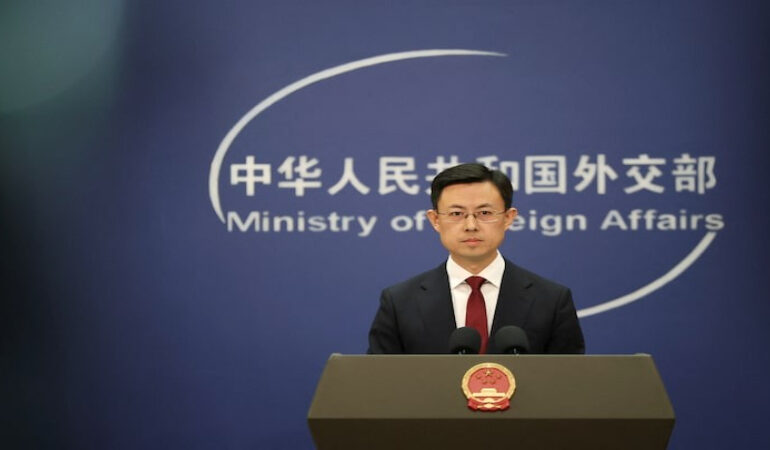
According to China’s foreign ministry, the invitation was formally delivered as part of Washington’s outreach to multiple countries for the initiative, which would begin by addressing the conflict in Gaza before expanding to other global disputes. Foreign ministry spokesperson Guo Jiakun confirmed that China had received the proposal but declined to elaborate on Beijing’s internal deliberations. The structure of the initiative has raised questions among diplomats, as participation would be time limited and subject to financial commitments, while leadership would remain permanently with the US president. These features have prompted some governments to assess whether involvement would complement or undermine existing multilateral frameworks that China has traditionally supported, including those centered on the United Nations.
Beijing’s reserved response highlights its preference for strategic ambiguity in sensitive diplomatic matters. While Chinese officials reiterated a willingness to work with Washington to maintain stable relations, they also emphasized the importance of safeguarding national interests. Over the past year, China and the United States have experienced what Beijing describes as dynamic stability, marked by periodic tensions alongside targeted cooperation. The invitation places China in a delicate position, as acceptance could be interpreted as endorsement of an unconventional diplomatic platform, while rejection could be framed as reluctance to engage in global conflict resolution. This balancing act reflects China’s broader challenge of navigating great power competition while projecting itself as a responsible international actor.
International reaction to the initiative has been cautious, with concerns that parallel structures could dilute established mechanisms for conflict mediation. For China, the decision will likely hinge on whether the proposal aligns with its long standing emphasis on multilateralism and state sovereignty. The episode underscores how geopolitical signaling increasingly intersects with personal diplomacy and alternative forums. As Beijing evaluates its options, the invitation itself serves as an indicator of Washington’s desire to involve China in high profile diplomatic efforts, even as rivalry remains a defining feature of the bilateral relationship. The outcome will be closely watched as a measure of how far recent efforts at stabilization can extend into broader global governance issues.