China’s Industrial Drones Shift From Export Growth to Domestic Integration
China’s drone industry is entering a new phase marked by deeper domestic integration rather than aggressive export expansion. After years of rapid growth driven by overseas demand and consumer innovation cycles, manufacturers are increasingly prioritizing applications within China’s own industrial and public service systems. This transition reflects both changing global conditions and evolving domestic policy priorities.
International markets remain relevant, but regulatory fragmentation, security scrutiny, and certification hurdles abroad have made exports more complex and less predictable. In response, Chinese drone firms are aligning more closely with domestic infrastructure needs, where deployment conditions are clearer and long term demand is more stable.
Domestic Integration Becomes the Primary Growth Engine
The most important development in China’s drone sector is the shift toward structured domestic deployment. Drones are increasingly treated as operational tools rather than standalone products. Their value lies in integration with logistics networks, energy systems, and public service platforms.
This approach favors scale and reliability over rapid feature turnover. Instead of launching frequent consumer models, manufacturers are focusing on standardized industrial platforms that can be deployed repeatedly across regions and sectors. This model supports predictable revenue and closer coordination with institutional buyers.
Domestic integration also allows for tighter alignment with regulatory frameworks. When deployment occurs within national systems, compliance with data governance, safety standards, and operational oversight can be built directly into system design rather than retrofitted for foreign markets.
Industrial and Public Sector Applications Expand
Industrial drones are increasingly visible across energy, transportation, and agriculture. Power grid inspection, pipeline monitoring, and renewable energy maintenance are among the fastest growing use cases. These applications benefit from drones’ ability to reduce labor risk and improve inspection frequency.
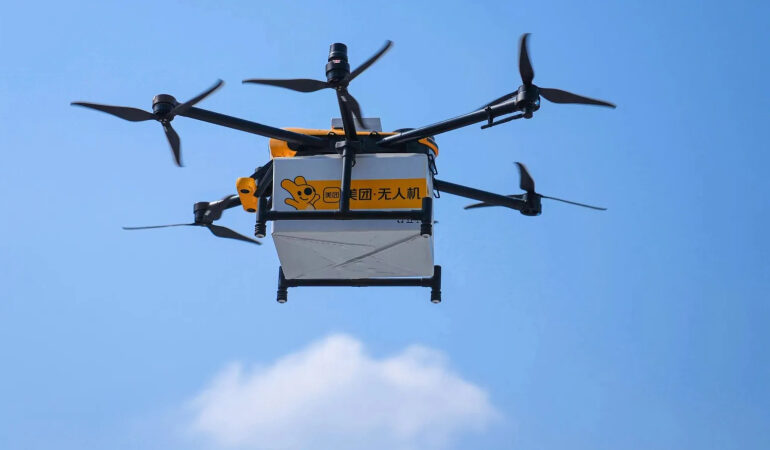
In logistics, drones are being tested and deployed in controlled environments such as industrial parks, ports, and remote regions. Rather than replacing existing delivery networks, they complement them by addressing last mile or hard to access routes. This incremental integration lowers operational risk while demonstrating practical value.
Public sector adoption is also expanding. Emergency response agencies, environmental monitoring departments, and municipal services are incorporating drones into routine operations. These deployments emphasize reliability, interoperability, and operator training over experimental capabilities.
Leading Firms Align With Institutional Demand
Major drone manufacturers, including DJI, are adjusting product strategies to match this institutional focus. Industrial platforms are designed for longer service lifecycles, modular payloads, and integration with enterprise software systems.
This alignment extends beyond hardware. Companies are investing in fleet management tools, maintenance services, and data processing solutions that fit into existing operational workflows. The objective is to reduce friction for institutional users and position drones as dependable infrastructure components.
By working closely with domestic clients, manufacturers gain clearer feedback loops and more predictable deployment environments. This contrasts with export markets, where shifting regulations and political sensitivities can disrupt long term planning.
Regulation and Procurement Shape the Market
Government procurement and regulatory standards are playing a central role in shaping the domestic drone market. Safety certification, airspace coordination, and data handling requirements are becoming more standardized. This favors firms capable of meeting compliance thresholds at scale.
Public procurement programs increasingly emphasize interoperability and lifecycle support. Rather than purchasing isolated devices, institutions seek systems that integrate with broader digital platforms. This encourages manufacturers to invest in compatibility and long term service capabilities.
Regulatory clarity also supports wider adoption. When operational rules are consistent across regions, organizations are more willing to commit resources to drone based solutions. This stability reinforces the shift away from speculative consumer markets toward institutional integration.
Implications for the Industry’s Growth Path
The move toward domestic integration suggests a steadier but more resilient growth trajectory for China’s drone industry. Revenue growth may be less explosive than during earlier export driven phases, but it is likely to be more durable. Institutional demand tends to be repeatable and less sensitive to short term market sentiment.
This transition also reshapes innovation priorities. Research and development efforts are increasingly directed toward reliability, automation, and system integration rather than novelty. Over time, this may strengthen China’s position in industrial drone applications even as consumer markets mature.
For global observers, the shift highlights a broader pattern in China’s technology ecosystem. As external conditions become more complex, domestic infrastructure and public sector alignment offer a stable foundation for continued development.
Conclusion
China’s drone industry is moving from export led expansion toward deeper domestic integration across industrial and public service systems. By aligning with infrastructure needs, regulatory frameworks, and institutional demand, manufacturers are building a more stable and sustainable growth model. This evolution reflects a broader strategic focus on reliability and scale, positioning drones as embedded tools within China’s operational landscape rather than standalone export products.