Why Industrial Robotics Is Becoming China’s Most Strategic Manufacturing Asset
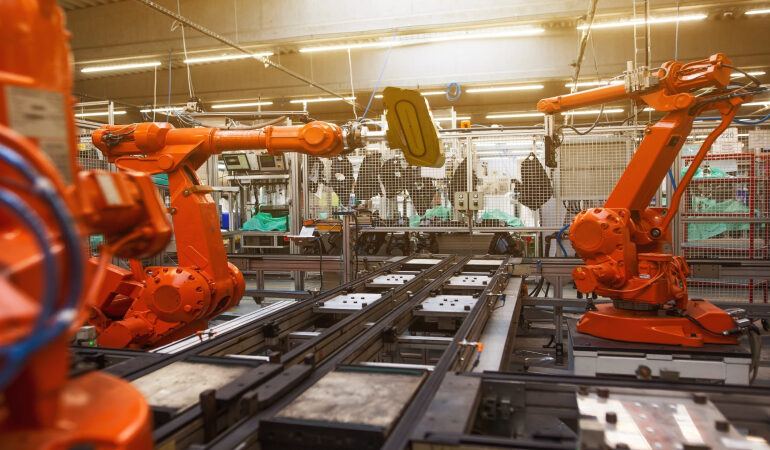
China’s manufacturing sector is entering a phase where scale alone is no longer sufficient to maintain competitiveness. Rising labor costs, an aging workforce, and tighter global supply chains are reshaping how factories operate. In this environment, industrial robotics is moving from a tool for efficiency to a core strategic asset embedded in national productivity planning.
Rather than focusing only on automation volume, policymakers and manufacturers are now treating robotics as essential infrastructure for industrial resilience. From electronics assembly to logistics hubs, robots are increasingly deployed to stabilize output, improve quality control, and support long term manufacturing continuity across regions and sectors.
Robotics at the Center of Industrial Upgrade Policy
Industrial robotics has become closely aligned with China’s broader manufacturing upgrade agenda. National and provincial policies increasingly position robotics as a foundation for moving up the value chain. The goal is not simply to replace labor but to enable more complex production processes that are less vulnerable to workforce volatility.
This policy alignment encourages adoption across traditional industries, including automotive, metals, and consumer electronics. Robotics is viewed as a way to sustain output while transitioning toward higher precision manufacturing. As a result, investment decisions are increasingly driven by strategic planning rather than short term cost savings.
Government support also plays a role through incentives, pilot zones, and standards development. These measures help reduce adoption barriers for small and mid sized manufacturers, accelerating diffusion beyond large industrial players.
Demographic Pressures and Workforce Realities
Demographic trends are a key factor behind the strategic importance of robotics. Manufacturing hubs are facing labor shortages as younger workers migrate toward service and technology sectors. At the same time, workforce aging raises concerns about productivity sustainability.
Robotics offers a way to stabilize operations without relying on continuous labor expansion. Automated systems can perform repetitive or physically demanding tasks while allowing human workers to focus on supervision, maintenance, and higher value roles. This shift supports productivity without increasing workforce strain.
For manufacturers, robotics also reduces dependency on seasonal labor and mitigates disruptions caused by workforce turnover. These benefits make robotics a long term planning tool rather than a discretionary upgrade.
Regional Clusters and Domestic Supply Chains
China’s robotics growth is increasingly supported by regional industrial clusters. Cities and manufacturing zones are developing integrated ecosystems that include component suppliers, system integrators, and software developers. This clustering reduces costs, shortens development cycles, and strengthens domestic supply chains.
The expansion of local robotics suppliers also reduces reliance on imported systems. Domestic firms are improving capabilities in motion control, sensors, and industrial software, enabling more customized solutions for local manufacturers. This trend supports broader industrial self sufficiency objectives.
As clusters mature, they attract talent and capital, reinforcing a cycle of innovation and deployment. Robotics becomes embedded not just in factories but in regional economic development strategies.
Robotics and Export Competitiveness
Industrial robotics is also central to maintaining export competitiveness. Global buyers increasingly demand consistent quality, traceability, and delivery reliability. Automated production lines help meet these expectations by reducing variability and improving process control.
By integrating robotics into export oriented manufacturing, firms can better absorb external shocks such as labor disruptions or sudden demand shifts. This resilience is increasingly valued in global supply chains that prioritize reliability alongside cost.
Robotics thus functions as a buffer against uncertainty, helping manufacturers maintain market access in a more fragmented global trade environment.
Conclusion
Industrial robotics is no longer an optional efficiency upgrade within China’s manufacturing sector. It has become a strategic asset that supports productivity, resilience, and long term industrial upgrading. Driven by demographic realities, policy alignment, and supply chain pressures, robotics now plays a central role in how China plans the future of its manufacturing base.