US and Taiwan Deepen Tech and AI Coordination
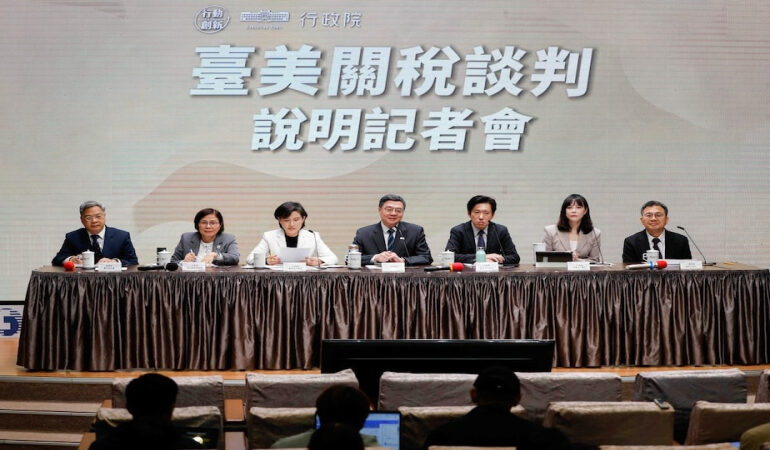
The United States and Taiwan have moved to deepen cooperation across artificial intelligence, advanced technology, and supply chain security following high level talks that underscored Taipei’s growing role in Washington’s economic and strategic planning. Senior officials from both sides discussed coordination on AI development, semiconductor resilience, and emerging technologies under an ongoing dialogue framework launched during the previous US administration. The talks come as Taiwan’s position in global technology supply chains continues to expand, particularly in advanced chip manufacturing critical to AI workloads. For Washington, closer engagement with Taiwan reflects a broader effort to reinforce trusted technology networks amid intensifying competition with China and growing concerns over supply chain concentration and economic coercion.
Discussions focused on economic security mechanisms tied to artificial intelligence and semiconductor ecosystems, including certification standards, critical minerals cooperation, and drone component supply chains. Both sides also addressed undersea cable protection and satellite based communications resilience, highlighting concerns around infrastructure vulnerability in an increasingly contested regional environment. Taiwan’s officials emphasized the importance of predictable trade frameworks and reduced tax frictions to support rising bilateral investment flows. Recent tariff adjustments and investment commitments point to a structural deepening of economic ties rather than symbolic engagement, as US firms expand operations linked to chip design, cloud services, and AI related manufacturing in Taiwan.
The talks reflect a convergence of strategic interests shaped by technology dependence and geopolitical risk management. Taiwan’s advanced manufacturing capacity has become central to US efforts to diversify supply chains away from China while maintaining access to high performance computing inputs. Taiwanese companies have committed significant capital to expand semiconductor, energy, and AI related production overseas, while US firms continue to scale investment in Taiwan to secure design and fabrication alignment. While Beijing continues to object to official engagement between Washington and Taipei, the momentum behind tech driven cooperation suggests that economic security considerations are increasingly shaping policy choices on both sides. The trajectory points to deeper integration driven by practical dependence rather than formal diplomatic change.