European Firms Rethink China Supply Chains
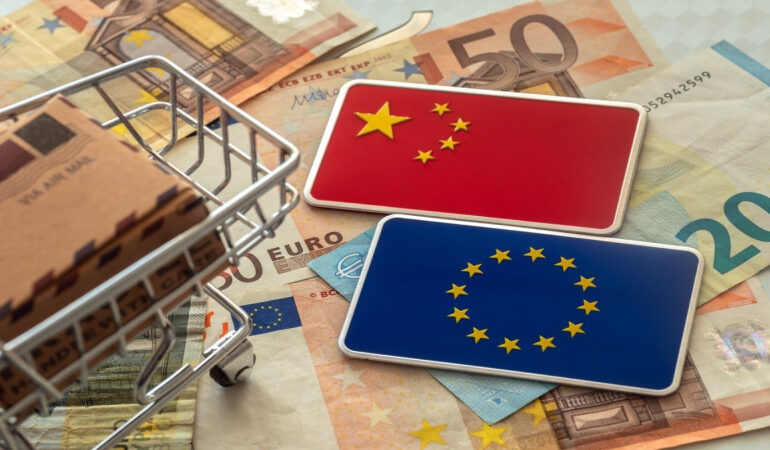
More than 70 percent of European companies operating in China are reassessing their supply chain strategies as geopolitical tensions and policy uncertainty complicate long term planning, according to a new business survey. The findings suggest that confidence among foreign firms is being tested by an operating environment that is increasingly shaped by security concerns rather than pure market logic. Many companies are now weighing the trade off between cost efficiency and resilience, reflecting a shift away from the assumption that China can serve as a single integrated hub for global production. Executives say the review process is not about exiting China altogether, but about reducing exposure to sudden regulatory changes and political shocks that could disrupt operations or access to overseas markets.
A growing number of firms are responding by building dual supply chain systems, with one structure dedicated to serving China’s domestic market and another designed for the rest of the world. This approach allows companies to remain active in China while insulating global operations from potential trade restrictions, sanctions, or export controls. Business leaders say the model increases costs in the short term but offers greater predictability over time. The shift highlights how globalisation is evolving into a more fragmented system, where efficiency is increasingly secondary to reliability. For China, the trend raises questions about its long standing role as the default manufacturing base for multinational companies serving global demand.
Security related concerns are a major driver behind the reassessment. European firms report growing unease about sourcing components from China in sectors considered sensitive or strategic, where regulatory scrutiny abroad has intensified. This has made China less attractive as a production base for goods destined for Western markets, even when local costs remain competitive. Executives also point to opaque policymaking and limited transparency as factors that complicate investment decisions. While China continues to promote openness and foreign investment, businesses say mixed signals from regulators make it difficult to forecast compliance risks and long term operating conditions with confidence.
The survey results suggest that China’s globalisation strategy may be facing structural headwinds. While most European firms intend to maintain a presence in the country, fewer now view China as an all purpose manufacturing solution. Instead, it is increasingly treated as one node in a diversified regional or global network. This recalibration reflects broader shifts in the global economy, where geopolitical alignment and supply chain security are reshaping corporate strategy. For Beijing, reversing this perception may prove challenging as foreign companies adapt to a world in which resilience, political risk management, and strategic alignment play a larger role than scale alone.