China showcases anti submarine drone and autonomous systems at major Saudi defence exhibition
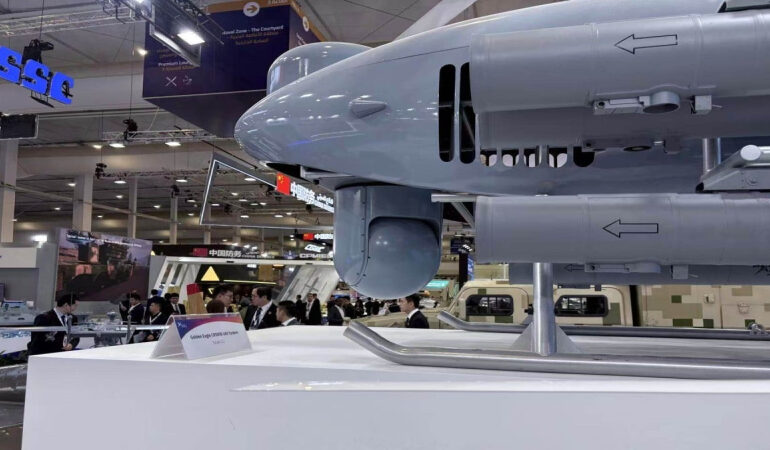
China has highlighted its growing ambitions in military autonomy by unveiling a range of uncrewed systems, including a drone designed for anti submarine warfare, at a major defence exhibition in Saudi Arabia. The display underscores Beijing’s push to expand its defence technology footprint in the Middle East as regional demand for advanced and cost effective autonomous platforms continues to rise.
The systems were presented at the World Defence Show in Riyadh, which has drawn more than 770 exhibitors from 76 countries. The event has become one of the most prominent defence showcases in the region, attracting military officials, procurement agencies, and defence contractors looking to modernise forces across land, air, and sea domains.
China has one of the largest national pavilions at the exhibition, signaling the importance it places on the Middle Eastern market. Among the most eye catching exhibits is a full scale model of the Wing Loong X unmanned aerial vehicle, a multi role drone capable of long endurance missions. The platform has been promoted as suitable for surveillance, strike operations, and maritime tasks, including tracking submarines through sensor and payload integration.
Chinese representatives at the show emphasized that the showcased systems reflect a broader shift toward intelligent and networked warfare. The anti submarine drone concept highlights China’s efforts to combine unmanned aviation with maritime security roles traditionally handled by crewed aircraft and naval vessels. Such capabilities are of particular interest to Gulf countries focused on protecting sea lanes, offshore energy infrastructure, and strategic waterways.
Saudi Arabia has been increasing defence spending and accelerating efforts to localise military production under its Vision 2030 programme. The growing emphasis on unmanned systems aligns with regional priorities to enhance situational awareness while reducing risks to personnel. Analysts say Chinese defence firms are positioning themselves as attractive partners by offering mature platforms, flexible export terms, and competitive pricing.
The Wing Loong series has already been exported to several countries and is often compared with Western equivalents in the same category. At the Riyadh exhibition, Chinese exhibitors presented the drone as part of a wider ecosystem that includes command systems, sensors, and potential integration with naval and ground based assets. This systems based approach is intended to appeal to buyers seeking turnkey solutions rather than standalone hardware.
The presence of advanced Chinese drones at the show also reflects broader geopolitical dynamics. As competition among global defence suppliers intensifies, Middle Eastern states are diversifying procurement beyond traditional Western partners. China’s expanding role in arms exhibitions and defence cooperation highlights its ambition to become a more influential player in global security markets.
Beyond aerial platforms, China’s pavilion features a range of other uncrewed and semi autonomous systems, including ground vehicles and maritime technologies. Together, they present a picture of a defence industry increasingly focused on artificial intelligence, autonomy, and multi domain integration.
As the World Defence Show continues, attention is expected to remain on how regional buyers respond to China’s offerings. The display of an anti submarine drone signals that Chinese defence technology is moving beyond conventional exports and into more complex mission areas, reflecting both technological progress and strategic intent.