French policy advisers urge EU to consider tariffs or weaker euro to counter rising Chinese competition
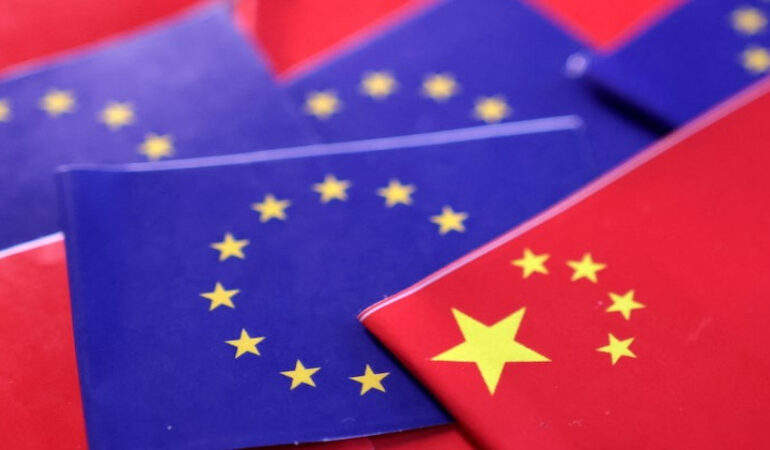
French government advisers are calling on the European Union to consider radical economic measures, including steep tariffs or a weaker euro, to counter what they describe as an accelerating wave of competitive pressure from China that threatens the core of Europe’s industrial base. The proposals reflect growing concern in Paris that existing trade tools are no longer sufficient to protect key sectors from low cost and increasingly sophisticated Chinese imports.
The recommendations were outlined in a new strategy report prepared by the Haut Commissariat à la Stratégie et au Plan, which advises the French prime minister on long term economic policy. The report argues that Europe is facing an exceptional challenge as Chinese companies gain market share across industries once dominated by European manufacturers, from automobiles and machine tools to chemicals and batteries.
According to the analysis, one possible response would be a 30 percent across the board tariff on Chinese goods entering the EU. Another, more complex option would involve a significant depreciation of the euro, estimated at 20 to 30 percent against the Chinese renminbi, to restore competitiveness for European exporters. The authors acknowledge that both measures would be extremely difficult to implement, politically and economically, but warn that inaction carries its own risks.
The report highlights the scale of Europe’s exposure to Chinese competition. It estimates that around a quarter of French exports and up to two thirds of German industrial production are now directly challenged by Chinese firms. Consultations with European manufacturers found that Chinese producers benefit not only from lower costs but also from improving product quality, with cost advantages estimated at 30 to 40 percent in many sectors.
Clément Beaune, head of the advisory body, warned that China’s industrial advance, combined with what the report describes as an undervalued currency, could push Europe into a cycle of long term industrial decline if decisive action is not taken. He argued that current EU trade defence mechanisms, such as anti dumping investigations, are too slow and fragmented to address the scale and speed of the challenge.
Existing EU measures often require years of investigation and consensus building, during which domestic industries may lose market share permanently. The report calls for a fundamental shift in policy, suggesting that Europe must be willing to act faster and on a broader scale to defend its industrial capacity.
Currency based solutions, however, pose particular challenges. Engineering a weaker euro or forcing an appreciation of the renminbi would require coordination across monetary and diplomatic channels well beyond the EU’s direct control. Tariffs, while more straightforward in theory, would still require qualified majority approval among member states, many of which remain divided over how aggressively to confront China.
French officials have also signaled a willingness to raise the issue on the global stage. France plans to use its presidency of the Group of Seven to focus on global macroeconomic imbalances, which it sees as driven by strong consumption in the United States, under investment in Europe, and export led growth in China.
The debate underscores a broader shift in European thinking. As competition from China intensifies, policymakers are increasingly questioning whether the EU’s traditional reliance on incremental trade measures is enough. The French report suggests that Europe may soon face a stark choice between bold intervention and gradual erosion of its industrial foundations.