Europe Warns Green Hydrogen Push Could Falter as China Scales Faster
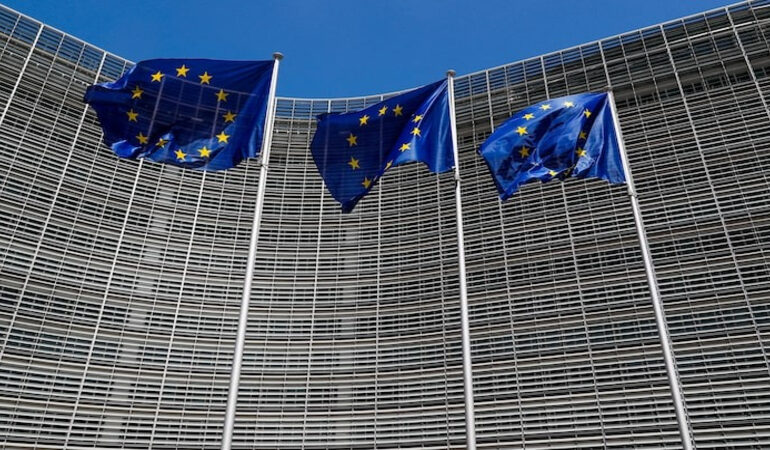
Europe’s emerging green hydrogen industry is sounding alarms over its ability to compete globally, as executives warn that China’s rapid industrial scaling could eclipse European efforts unless the European Union accelerates support for domestic manufacturers. Industry leaders argue that without stronger public procurement rules favoring European production, the region risks repeating past mistakes that left it dependent on imported clean energy technologies.
Green hydrogen is central to Europe’s climate strategy, particularly for reducing emissions in hard to decarbonize sectors such as steel, chemicals, and fertilizers. Despite ambitious targets, the industry has struggled to gain momentum. High energy prices across Europe have weighed heavily on project economics, while cheaper fossil fuel based hydrogen has continued to dominate industrial supply. As a result, many hydrogen projects planned over the past year were postponed or cancelled, slowing the pace of deployment and learning.
Executives say this slowdown is giving Chinese manufacturers an opening. China has pushed ahead with large scale hydrogen and electrolyser projects, benefiting from lower costs, coordinated industrial policy, and strong state backing. These conditions allow Chinese companies to rapidly build capacity, refine technology, and reduce prices through volume. European firms, by contrast, remain more fragmented and constrained by slower project pipelines.
Industry leaders are urging the European Commission to introduce clear made in Europe requirements for publicly funded hydrogen projects, particularly for electrolyser procurement. They argue that public contracts could provide the scale and certainty European manufacturers need to expand production and stay competitive. The warning draws parallels with Europe’s solar sector, where domestic manufacturing collapsed in the face of cheaper Chinese imports, leaving the region heavily reliant on foreign supply.
The European Commission is preparing proposals aimed at prioritizing European manufacturers in public procurement, potentially tapping into trillions of euros in annual public spending. However, the scope of these measures remains under debate. Some governments and companies are cautious about how far such rules should go, and discussions continue over whether suppliers from non EU countries should qualify under any European preference scheme.
European hydrogen executives stress that the challenge is not a lack of technical capability. They say Europe still holds strong positions in electrolyser efficiency and system integration. The risk lies in failing to deploy these technologies at scale. Without sufficient projects, companies lose opportunities to improve performance, cut costs, and build supply chains, while competitors abroad move ahead.
China already accounts for the majority of global electrolyser manufacturing capacity, a reality that underscores the urgency felt within Europe’s hydrogen sector. While European firms still supply most hydrogen projects within the EU, signs of growing Chinese competitiveness are emerging. Policymakers have begun tightening access to subsidy programs for projects using imported equipment, but industry leaders say sustained investment and clearer industrial priorities will be essential to secure Europe’s position in the global green hydrogen race.