China Cuts Fundraising Wait Times to Support Loss Making Tech Firms
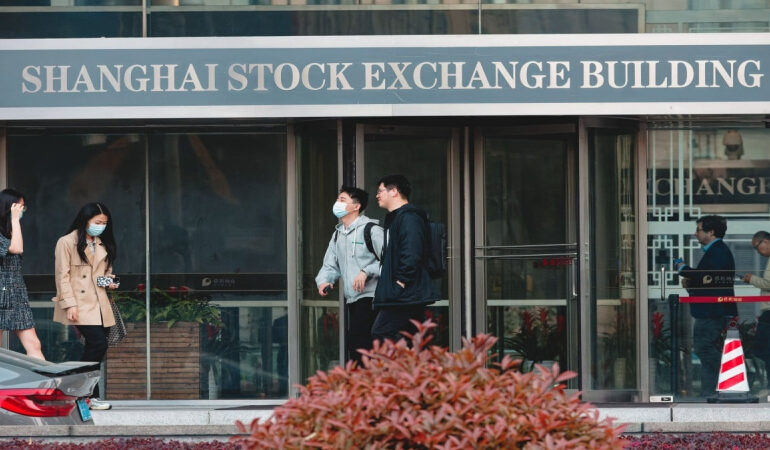
China has moved to ease fundraising pressure on technology companies by sharply reducing the waiting period for loss making firms seeking refinancing or additional capital, underscoring Beijing’s determination to support strategic industries despite weaker near term profitability. The policy shift is designed to improve cash flow access for cutting edge companies as China accelerates its push for technological self reliance.
Stock exchanges in Shanghai, Shenzhen, and Beijing jointly announced a new package of measures aimed at speeding up capital raising for technology firms. Under the revised rules, eligible listed companies can apply for refinancing or post initial public offering fundraising after as little as six months, a significant reduction from the previous standard waiting period of 18 months that applied to consecutively loss making firms.
The change primarily benefits technology companies listed under special rules that allow firms to go public before achieving profitability. These rules were introduced to help innovative companies raise capital earlier in their development cycles, particularly in sectors such as semiconductors, advanced manufacturing, biotechnology, and artificial intelligence. However, tighter controls imposed in 2023 had lengthened refinancing intervals, creating funding strain for companies still investing heavily in research and expansion.
By shortening the refinancing window, regulators are signaling a more flexible stance toward temporary losses in strategic sectors. Policymakers have repeatedly emphasized that sustained investment is essential for building domestic capabilities in critical technologies, even if it weighs on earnings in the short term. Faster access to capital is intended to prevent promising firms from scaling back projects or delaying innovation due to liquidity constraints.
The exchanges said the measures are part of a broader effort to improve the quality and efficiency of China’s capital markets. Officials view financial markets as a key tool in channeling resources toward national priorities, especially as external pressures and export controls complicate access to foreign technology and funding. Supporting loss making but technologically important firms is increasingly seen as a necessary trade off.
Market participants say the policy could boost confidence among both issuers and investors. For companies, the ability to refinance sooner provides greater certainty in planning long term projects and managing operational risks. For investors, the move reinforces the idea that authorities are committed to maintaining stable funding channels for priority industries, reducing the risk of abrupt policy tightening.
The decision also reflects a recalibration following market volatility in recent years. Regulators have been trying to strike a balance between curbing speculative behavior and ensuring that productive sectors are not starved of capital. By focusing relief on technology firms rather than applying broad market easing, the exchanges are attempting to target support where it is most aligned with industrial goals.
China’s technology companies continue to face challenges from slowing global demand, intense domestic competition, and ongoing geopolitical uncertainty. Many remain in heavy investment phases, with profitability taking a back seat to capacity building and innovation. The reduced waiting period for refinancing is expected to help these firms weather near term pressures while continuing to invest in areas deemed vital to China’s long term economic resilience.