Survey Warns China May Surpass US Economy While Taiwan Conflict Risks Persist
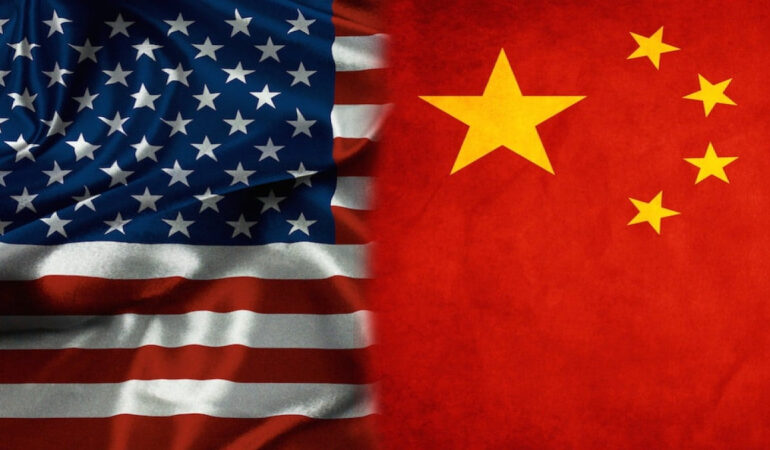
China could become the world’s largest economy within the next decade, yet still face a heightened risk of military confrontation in the Taiwan Strait, according to a new survey of global geopolitical forecasters. The findings highlight a future in which economic strength does not necessarily translate into reduced conflict, underscoring the complexity of the evolving US China relationship.
The survey, conducted by the Atlantic Council, gathered responses from 447 geostrategists and foresight practitioners across government, academia, the private sector, and non profit institutions. A majority of respondents, around 58 percent, said they expect China to overtake the United States as the world’s largest economy by 2036. About a third of those surveyed believe the US will retain its economic lead over the same period, reflecting continued uncertainty over long term growth trajectories.
Despite expectations of China’s rising economic weight, the survey suggests that military and security dynamics may remain tense. Many respondents believe the United States is likely to retain superior military power even if China becomes the dominant economic force. This imbalance could contribute to strategic friction rather than stability, particularly in sensitive flashpoints such as Taiwan.
According to the report, a significant portion of experts believe Beijing could attempt to take Taiwan by force within the next decade, even under conditions where the US maintains military superiority. The finding points to a growing concern among analysts that economic confidence or domestic pressures could encourage more assertive behavior, rather than restraint, as China’s global position evolves.
Views on technological leadership and diplomatic influence were more evenly divided. Respondents were split on whether China or the United States would lead in innovation, suggesting a future of close competition rather than clear dominance. Similar divisions emerged around diplomatic influence, with many experts describing the two powers as likely peer competitors across multiple domains. This assessment reflects a world moving away from unipolar dominance toward a more contested global order.
The survey results also highlight how economic size alone may not resolve strategic rivalry. Even if China becomes the world’s largest economy, respondents widely expect the US to remain a central security actor in Asia, supported by alliances and advanced military capabilities. This dynamic could increase the risk of miscalculation, particularly if both sides test red lines while assuming the other will avoid escalation.
Taiwan remains a focal point of concern. Analysts note that the island’s importance extends beyond geopolitics to global supply chains, especially in advanced manufacturing and technology. Any conflict in the Taiwan Strait would have far reaching economic consequences, affecting trade, investment flows, and financial markets worldwide. This raises the stakes for both Washington and Beijing as they navigate long term competition.
The report underscores the difficulty of forecasting a linear transition of power. Economic growth, military strength, technology leadership, and political influence are evolving on different timelines. For policymakers and investors, the message is that even a scenario where China surpasses the US economically does not guarantee a more predictable or peaceful global environment. Instead, the coming decade may be defined by overlapping strengths, persistent rivalry, and heightened risks around unresolved regional disputes.