Xi Signals Support for People to People Ties in Letter to Iowa Contacts
Chinese President Xi Jinping has reaffirmed the importance of grassroots exchanges between China and the United States in a letter addressed to long time contacts in Iowa, offering a message of reassurance as both sides navigate a complex diplomatic landscape.
In his reply to New Year greetings from Iowa based acquaintances, Xi emphasized that the foundation of bilateral relations rests with ordinary citizens rather than solely with political leaders. He noted that the desire of the Chinese and American peoples for cooperation and exchange would remain steady regardless of fluctuations in official ties. The letter referenced relationships dating back to the mid 1980s, when Xi led a delegation from Hebei province to Iowa to study agricultural practices under a sister state arrangement.
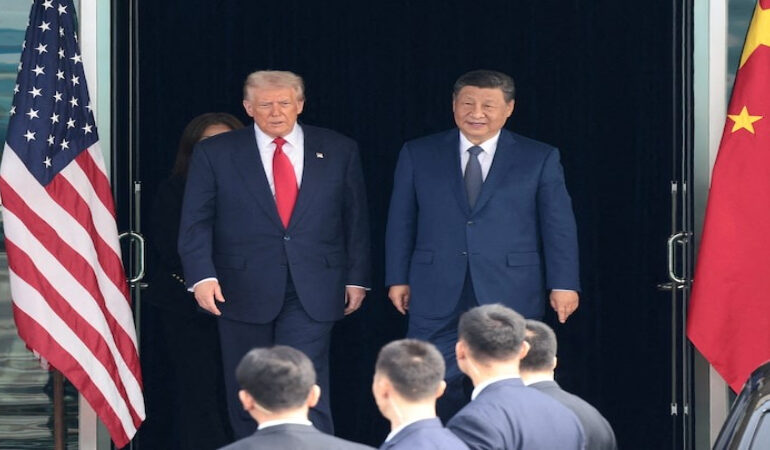
The outreach comes ahead of an anticipated meeting between Xi and U.S. President Donald Trump later this year. The two leaders last met on the sidelines of the Asia Pacific Economic Cooperation summit in South Korea in October 2025. That encounter helped stabilize high level dialogue after months of trade friction and policy uncertainty.
Relations between the world’s two largest economies experienced turbulence in 2025. President Trump publicly threatened to impose additional tariffs on Chinese imports, escalating trade tensions that had already weighed on supply chains and global markets. However, talks between the two sides resulted in a one year extension of a trade truce. Under the arrangement, Washington agreed to reduce certain tariffs while Beijing committed to address concerns related to fentanyl trafficking, resume soybean purchases from U.S. farmers and ease restrictions on rare earth exports.
Iowa holds particular symbolic and economic significance in this context. The state is a leading producer of soybeans, a commodity that has featured prominently in previous trade negotiations. Xi’s longstanding personal connections in Iowa have often been cited as an example of subnational engagement helping to bridge broader geopolitical divides.
People to people exchanges have also seen renewed momentum beyond official channels. Digital interactions between Chinese and American users have increased, with cultural and technological curiosity driving online engagement. Analysts suggest that such informal links can soften perceptions during periods of policy disagreement.
A recent phone call between Xi and Trump in early February addressed issues including Taiwan and broader security concerns, signaling that direct communication remains active despite strategic competition. President Trump has indicated plans to visit China in April, while a return visit by Xi to the United States is expected later next year.
Observers note that while structural differences between the two countries persist, messages emphasizing cooperation at the citizen level serve to maintain dialogue pathways during sensitive periods. The latest correspondence highlights how historical ties and agricultural diplomacy continue to play a symbolic role in the evolving framework of Sino American relations.