China Accelerates Trade Deals to Reinforce Global Position Amid U.S. Tariff Pressure
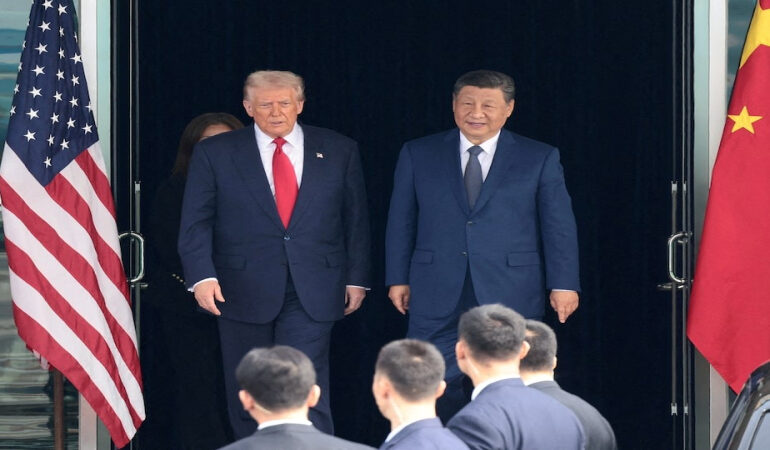
China is moving aggressively to deepen its integration into global trade networks as it seeks to shield its economy from prolonged tariff pressure and geopolitical rivalry with the United States. Policy advisers and trade officials are accelerating negotiations on multiple free trade agreements while promoting multilateral cooperation as a counterweight to rising protectionism.
Beijing is currently pursuing around 20 trade agreements at various stages of negotiation, targeting partners across Europe, the Gulf region, Asia Pacific, and Latin America. The strategy reflects a broader effort to embed China more deeply within major economic blocs, making it harder for trading partners to disengage under external pressure. Officials argue that expanding market access and strengthening supply chain ties will help stabilize China’s $19 trillion economy in a volatile global environment.
In recent months, Chinese diplomats have intensified outreach to both developed and emerging economies. Discussions with European counterparts have included the possibility of closer trade arrangements, while negotiations with Gulf Cooperation Council members and trans Pacific economies have gained renewed urgency. China is also prioritizing accession to the Comprehensive and Progressive Agreement for Trans Pacific Partnership, a major regional trade pact that covers a significant share of global GDP.
Beyond tariff reductions, China is emphasizing digital trade and technology standards as part of its long term commercial strategy. Updated agreements with Southeast Asian partners incorporate cooperation on artificial intelligence driven customs systems and cross border e commerce infrastructure. Beijing is also promoting its digital platforms and logistics technologies in neighboring countries to streamline trade flows and enhance connectivity.
Analysts say this approach reflects lessons drawn from years of trade friction with Washington. By diversifying export destinations and strengthening institutional ties through multilateral frameworks, China aims to reduce vulnerability to unilateral tariffs. Policy papers from leading research institutions have consistently stressed the importance of countering economic decoupling by reinforcing interdependence.
However, China’s large trade surplus presents challenges. With a surplus exceeding one trillion dollars, some trading partners worry that greater market access could lead to a surge of low cost manufactured goods, intensifying competitive pressure on domestic industries. European and North American officials have raised concerns about overcapacity in sectors such as electric vehicles, solar panels, and industrial equipment.
At the same time, Beijing has signaled that boosting imports and domestic consumption will be part of its next economic planning cycle. Officials have indicated that expanding internal demand is a policy priority, though structural rebalancing is expected to take time. Economists note that stronger household spending would help ease trade imbalances and make China’s push for broader trade integration more sustainable.
As global supply chains continue to realign, China’s strategy centers on reinforcing its role as a pivotal manufacturing and trade hub. By combining new trade agreements, digital infrastructure exports, and participation in regional blocs, Beijing is seeking to position itself at the core of a reshaped multilateral trading system.