Panama annuls CK Hutchison canal port contracts as Maersk unit steps in
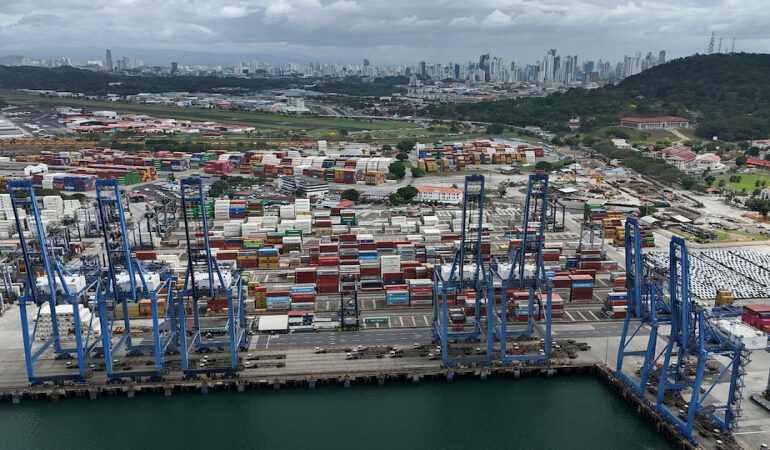
Panama has formally canceled long standing port concessions held by a subsidiary of Hong Kong based CK Hutchison, clearing the way for a temporary operational takeover by a unit of Danish shipping giant Maersk at two key terminals linked to the Panama Canal.
The decision became effective after the country’s official gazette published a Supreme Court ruling that annulled the contracts for the Balboa and Cristobal ports. The concessions had been operated for more than two decades by Panama Ports Company, a subsidiary of CK Hutchison. The court found that the original agreements violated constitutional provisions, prompting the government to move forward with a transition plan.
Following the publication of the ruling, Panama’s Maritime Authority assumed possession of both terminals to ensure continuity of operations. Authorities indicated that separate contractual arrangements are being prepared for each port during the interim period. The goal is to maintain uninterrupted cargo flows through one of the world’s most strategic maritime corridors while a new long term concession framework is developed.
The Balboa and Cristobal ports sit at opposite ends of the Panama Canal, which handles roughly 5 percent of global maritime trade. Their location makes them critical nodes in international shipping networks, particularly for container traffic linking Asia, the Americas and Europe. Any disruption in operations could have ripple effects across global supply chains.
President Jose Raul Mulino previously signaled that the government would formalize an arrangement with APM Terminals Panama, a subsidiary of Maersk, once the court ruling became legally binding. Under the temporary setup, APM Terminals is expected to manage and control port operations while the state designs a new bidding process for long term concessions.
The annulment comes at a time of heightened geopolitical sensitivity surrounding the canal. The waterway has increasingly been viewed through the lens of strategic competition between the United States and China. Washington has expressed concerns in recent years about Chinese commercial influence over infrastructure linked to critical trade routes. The cancellation of CK Hutchison’s contracts is likely to be interpreted as a significant shift in Panama’s port governance landscape.
Market analysts note that while the immediate impact on shipping volumes is expected to be limited, the longer term implications could reshape competitive dynamics in regional port management. A transparent and competitive concession process will be closely watched by global logistics operators and investors.
For Panama, safeguarding operational stability at the canal’s gateway ports remains the priority. The interim management structure is designed to prevent disruption as legal and regulatory adjustments unfold. With global trade flows still adjusting to shifting supply chains and evolving geopolitical risks, the governance of key transit hubs such as Balboa and Cristobal carries outsized economic significance.