Wassenaar Arrangement at 30 faces scrutiny as China weighs its stance on export controls
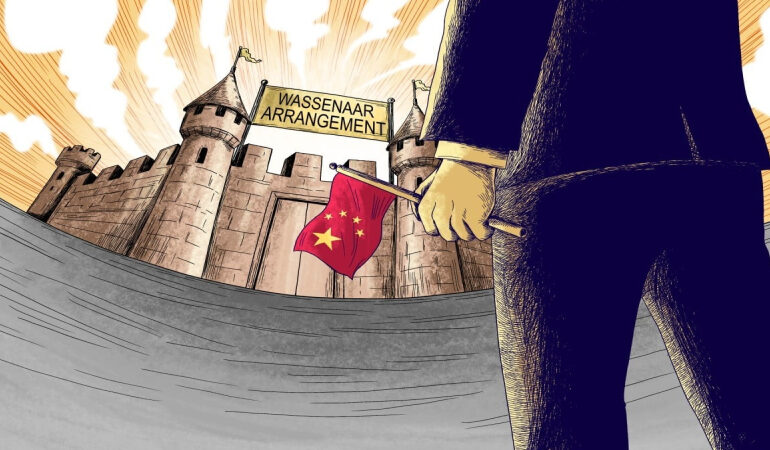
As the Wassenaar Arrangement approaches its third decade, questions are resurfacing over whether China will eventually seek membership in the multilateral export control regime or continue to remain outside what it has long viewed with suspicion.
Established in 1996 in the Netherlands city of Wassenaar, the Wassenaar Arrangement is a voluntary framework designed to promote transparency and responsibility in the transfer of conventional arms and dual use goods and technologies. Its 42 participating states include most major Western economies, along with countries such as Russia and India. Members agree to share information on arms exports and implement national controls on sensitive technologies ranging from advanced electronics to aerospace components.
China is not a member. In Beijing, the regime has often been perceived as an exclusive club that restricts access to high end defence and industrial technologies. Chinese analysts have argued that the arrangement effectively limits non members’ ability to acquire cutting edge equipment, reinforcing technological disparities. This perception has contributed to China’s long standing emphasis on indigenous innovation and self reliance in sectors such as semiconductors, aviation and advanced materials.
Over the past decade, China has significantly expanded its domestic capabilities in many areas covered by the Wassenaar control lists. It has invested heavily in military modernization, space systems and high performance computing. At the same time, geopolitical tensions and widening technology export restrictions from the United States and its allies have sharpened debate about whether engagement or confrontation better serves China’s long term interests.
Supporters of potential Chinese participation argue that joining the Wassenaar Arrangement could provide Beijing with a platform to shape global export control norms rather than remain subject to them. Membership might also signal a willingness to enhance transparency and build trust in arms transfers, particularly as China’s role as a major defence exporter grows in regions such as Africa and the Middle East.
Skeptics, however, question whether current political conditions would allow for meaningful integration. The arrangement operates by consensus, and new members must align their national export control systems with agreed standards. Ongoing strategic rivalry between China and several Wassenaar participants could complicate any accession process.
The broader landscape of export controls has evolved dramatically since the 1990s. Emerging technologies such as artificial intelligence, quantum computing and advanced semiconductors now sit at the center of strategic competition. In this context, the relevance and effectiveness of existing multilateral regimes are under renewed examination.
For China, the decision to pursue membership would involve balancing sovereignty concerns, industrial strategy and diplomatic signaling. For existing members, the question is whether expanding participation strengthens the regime’s legitimacy or risks diluting its cohesion. As global security dynamics shift, the future of the Wassenaar Arrangement may hinge in part on how it adapts to the rise of new technological powers.