China’s New Energy Strategy Focuses on Security, Stability and Climate Goals
China is preparing a revised national energy strategy designed to shield its economy from external shocks while accelerating progress toward long term climate commitments. As Beijing moves deeper into its current five year development cycle, energy security has been elevated to a central pillar of economic planning, reflecting rising geopolitical tensions, trade volatility and global supply chain disruptions.
The National Energy Administration confirmed that a new development framework will be introduced this year alongside sector specific plans covering power generation, grid modernization and emerging technologies. Officials described the global energy landscape as increasingly complex, shaped by shifting commodity prices, technological competition and mounting pressure to reduce carbon emissions. Policymakers believe a more resilient domestic energy system is essential to sustaining industrial output and stabilizing growth.
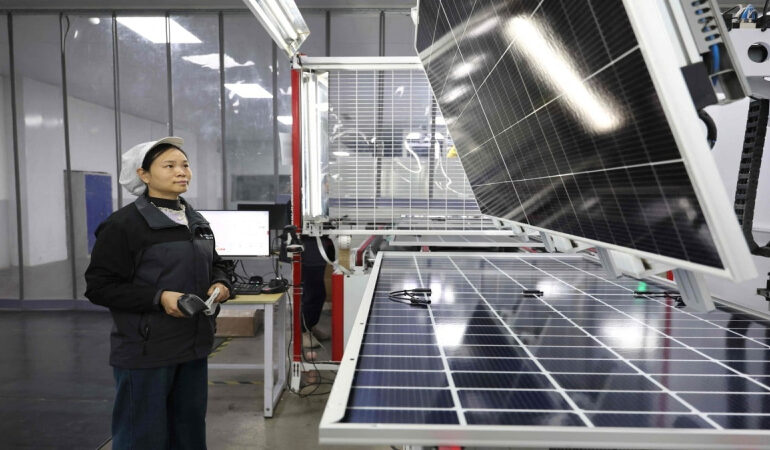
China remains the world’s largest energy consumer and carbon emitter, yet it is also the largest investor in renewable energy infrastructure. Over the past decade the country has rapidly expanded solar, wind and hydropower capacity. Manufacturing hubs in provinces such as Jiangsu and Guangdong continue to scale up solar module production, reinforcing China’s dominance in global clean energy supply chains. At the same time authorities are seeking to reduce dependence on imported fossil fuels, particularly crude oil and liquefied natural gas, which expose the economy to external price swings.
The updated strategy emphasizes major engineering projects including ultra high voltage transmission networks, advanced energy storage systems and expanded nuclear power capacity. These investments aim to balance intermittent renewable output with stable baseload supply, ensuring grid reliability while reducing coal reliance. Coal is still expected to play a supporting role in maintaining energy stability, though Beijing has pledged to gradually cap and reduce its share in the overall energy mix.
Energy security concerns have intensified following recent global disruptions that affected fuel shipments and commodity markets. Chinese planners argue that strengthening domestic production capacity and diversifying energy sources will cushion the economy against similar shocks. The new blueprint also highlights the need to integrate digital management systems and intelligent grid technologies to improve efficiency and demand forecasting.
Climate targets remain embedded within the strategy. China has committed to peak carbon emissions before 2030 and achieve carbon neutrality by 2060. Officials indicate that policy coordination between industrial, financial and environmental regulators will be strengthened to support low carbon transformation. Green finance instruments and carbon trading mechanisms are expected to expand alongside infrastructure spending.
Industry analysts note that aligning energy security with climate ambition represents a complex balancing act. Rapid electrification of transport and manufacturing requires stable power supply, while decarbonization demands sustained investment in renewable capacity and storage innovation. The coming five year period will likely test Beijing’s ability to manage growth, sustainability and geopolitical uncertainty within a single integrated framework.