Trump administration considers Pentagon AI tool to shape critical minerals pricing bloc
The Trump administration is exploring the use of a Pentagon developed artificial intelligence program to help establish reference prices for critical minerals as part of a proposed trade bloc aimed at reducing reliance on Chinese supply chains, according to sources familiar with the discussions.
At the center of the plan is the Defense Department’s Open Price Exploration for National Security program, known as OPEN. The AI driven initiative was launched in 2023 by the Defense Advanced Research Projects Agency to calculate benchmark prices for strategically important metals by factoring in labor, processing costs and what US officials describe as market distortions linked to Chinese production practices.
Vice President JD Vance recently outlined a proposal for the United States and more than 50 partner countries to adopt reference prices for critical minerals at various stages of production. Those prices would be supported by adjustable tariffs designed to maintain what the administration calls pricing integrity. The OPEN system is expected to generate the pricing models that would underpin such a framework.
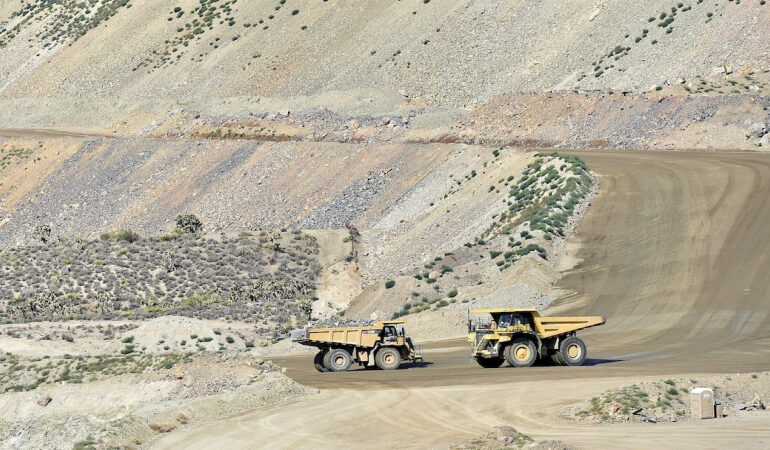
Initial focus areas reportedly include germanium, gallium, antimony and tungsten, all considered essential for defense systems, semiconductors and advanced manufacturing. These metals are often thinly traded and subject to significant price swings, complicating investment decisions for Western mining and processing projects.
China is the world’s dominant producer or processor of many critical minerals. US officials and industry representatives have argued that Chinese supply practices, including periods of sustained low pricing, have pressured Western producers and discouraged new projects. Beijing has maintained that its mineral export policies comply with international trade rules.
Supporters of the AI pricing approach argue that more transparent and cost grounded benchmarks could provide miners and manufacturers with greater certainty, encouraging investment in non Chinese supply chains. By offering a reference price backed by a coalition of allied nations, the administration hopes to create a more stable trading environment and reduce exposure to geopolitical risk.
However, questions remain about how the mechanism would function in practice. It is unclear whether AI derived reference prices would fluctuate with market conditions or serve as fixed targets. The interaction between reference prices and tariffs also raises concerns about potential cost increases for downstream industries such as automotive and electronics manufacturing.
Critics note that trade barriers alone may not guarantee price floors if multiple producers continue competing globally. Implementation would require broad international participation to avoid fragmentation and unintended supply chain distortions.
The proposal comes amid a wider push to deploy artificial intelligence tools in national security and economic policy domains. If adopted, the AI based pricing framework would represent an unprecedented effort to blend defense technology with global commodity market governance.