US dependence on Taiwan chips raises alarm as China tensions persist
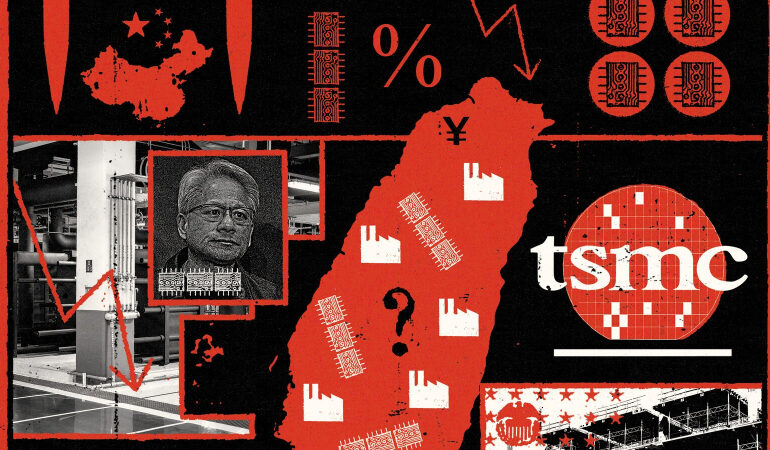
Growing geopolitical tensions in the Taiwan Strait are intensifying concerns in Washington over the United States’ heavy reliance on advanced semiconductor production concentrated on the island. Policymakers and industry leaders have long debated the risks posed by a potential disruption to Taiwan’s chip exports, which underpin large segments of the global technology supply chain.
Taiwan produces roughly 90 percent of the world’s most advanced semiconductors, making it a critical node in industries ranging from smartphones and cloud computing to defense systems and artificial intelligence. Companies such as Apple, Advanced Micro Devices and Qualcomm depend heavily on Taiwanese fabrication plants for leading edge chips used in high performance devices and data centers.
US national security officials have repeatedly warned technology executives about the strategic vulnerability created by this concentration of manufacturing capacity. In closed door briefings over several years, officials have highlighted scenarios including a military conflict, blockade or other coercive action by Beijing that could interrupt chip shipments. China regards Taiwan as part of its territory and has not ruled out the use of force to achieve unification.
A sudden halt in Taiwanese semiconductor exports would likely have far reaching economic consequences. Advanced chips are essential for consumer electronics, automobiles, telecommunications equipment and critical infrastructure. A prolonged disruption could slow production lines, raise costs and trigger supply shortages across multiple sectors of the US economy.
In response, successive US administrations have sought to reduce dependence on overseas chip manufacturing. The Biden administration introduced large scale incentives to boost domestic semiconductor production, providing billions of dollars in grants and subsidies to encourage construction of fabrication plants within the United States. The policy aimed to strengthen supply chain resilience and safeguard national security.
When domestic reshoring efforts faced delays and industry resistance due to high costs and complex construction timelines, the Trump administration signaled a tougher approach, including the possibility of tariffs to pressure companies to diversify supply chains. Both strategies reflect bipartisan recognition of semiconductor manufacturing as a strategic priority.
However, building advanced chip fabrication facilities is capital intensive and technically demanding. It can take years and tens of billions of dollars to bring a cutting edge plant online. Moreover, Taiwan’s ecosystem benefits from decades of accumulated expertise, supplier networks and engineering talent that are not easily replicated.
Analysts note that while diversification efforts are underway in the United States, Japan and parts of Europe, Taiwan is likely to remain central to global semiconductor production in the near term. This reality leaves the technology sector exposed to geopolitical risk in East Asia.
As tensions between Washington and Beijing continue, the semiconductor supply chain has emerged as one of the most sensitive fault lines in global trade and security policy. For Silicon Valley and the broader US economy, the challenge lies in balancing cost efficiency with strategic resilience in an increasingly uncertain geopolitical environment.