How the Pentagon Selects Drones Amid China Dominance in Global Supply Chains
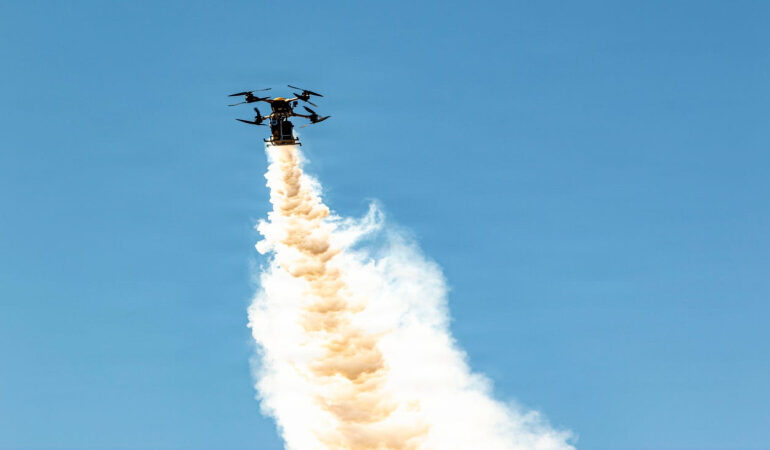
The United States Department of Defense is accelerating drone adoption across military branches while tightening oversight on supply chains in a market heavily dominated by Chinese manufacturers. At the center of this effort is the Blue UAS List, a vetted catalog of approved unmanned aerial systems that troops and federal agencies are authorized to purchase and deploy.
The Blue UAS program was established to identify drones that comply with US cybersecurity, legal and supply chain standards. The Defense Contract Management Agency formally launched an official Blue UAS List website in late 2025, streamlining procurement and giving service members clearer guidance on trusted systems. Currently, more than 50 drones are cleared for training use, with nearly 30 approved for operational deployment after additional reviews.
The approval process is designed to prioritize affordable, commercially available drones that can be rapidly fielded and upgraded. Evaluations assess hardware origins, software integrity and exposure to foreign supply chain risks. Systems must demonstrate resilience against cyber vulnerabilities and comply with federal acquisition regulations.
The initiative reflects broader Pentagon concerns over reliance on Chinese components. Industry estimates indicate that Chinese firms control a dominant share of the global commercial drone market, including critical parts such as motors and flight controllers. US defense officials have warned that dependence on these supply chains could create vulnerabilities in a conflict or trade disruption scenario.
Despite efforts to reduce exposure, reports suggest that some approved systems still incorporate Chinese made components, particularly motors. While these parts are often described as basic hardware rather than sensitive electronics, analysts note that availability risk remains significant. If supply routes were restricted, domestic drone production could face immediate bottlenecks.
To address these risks, the Pentagon has linked the Blue UAS initiative with its broader Drone Dominance Program. Announced in 2025, the strategy aims to field hundreds of thousands of low cost drones, including one way attack systems, within the next few years. The Defense Department plans to invest more than one billion dollars into expanding domestic drone manufacturing capacity and supporting emerging startups.
A key component of this push is Gauntlet, a large scale testing event underway at Fort Benning in Georgia. More than two dozen companies, including several smaller firms and international partners, are participating in prototype evaluations. Following the trials, the Pentagon intends to purchase significant quantities of selected systems for further development.
The shift signals a move toward faster, iterative acquisition cycles. Rather than relying solely on long term contracts with established defense primes, the Pentagon is increasingly incorporating commercial innovation into military capabilities. At the same time, policymakers are balancing speed with strategic caution to avoid deepening dependence on foreign dominated supply chains.
As drone technology becomes central to modern warfare, procurement decisions are now shaped as much by geopolitical considerations as by performance metrics.