Report Flags Chinese-Linked Influence Campaign Targeting Japan Election and US Politics
A US based research foundation has identified a coordinated online influence operation, it says is linked to Chinese networks and aimed at shaping political narratives in Japan, the United States, and other countries. The activity reportedly intensified around Japan’s recent general election and also included messaging targeting former US President Donald Trump.
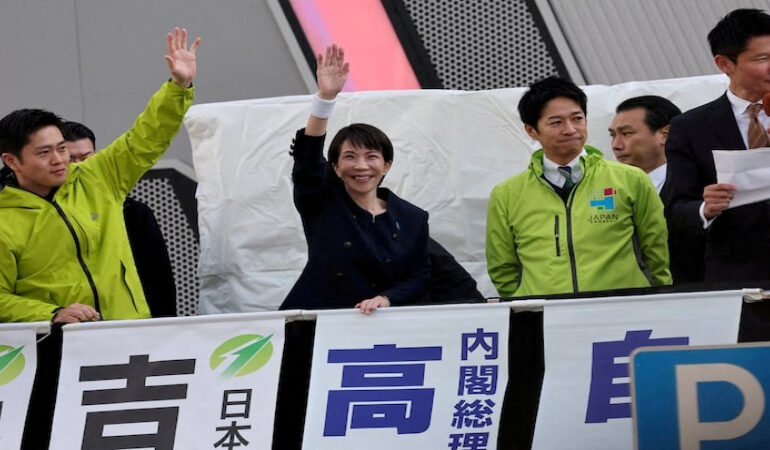
According to analysis from the Foundation for Defense of Democracies, dozens of social media accounts on X and Tumblr circulated coordinated posts criticizing Japanese Prime Minister Sanae Takaichi during the election period. The accounts portrayed her as militaristic and illegitimate, while amplifying corruption claims and questioning her stance toward China.
Researchers said the cluster formed part of a broader network of more than 300 accounts active since at least late 2025. The campaign allegedly promoted pro China narratives, criticized human rights organizations and attempted to influence political discourse in Japan, the United States, the Philippines and parts of Latin America.
Takaichi’s office acknowledged awareness of suspicious foreign social media activity connected to Japan’s election. A spokesperson described foreign online interference as a national security concern that could undermine democratic institutions and electoral fairness.
China’s embassy in Washington rejected the allegations, calling the analysis groundless and reiterating that the Chinese government opposes the use of fake accounts to manipulate public opinion or spread disinformation.
Cybersecurity analysts have linked similar campaigns to long running operations often referred to as Spamouflage or Dragonbridge. These networks typically rely on large volumes of low engagement accounts that coordinate hashtags and messaging to influence social media algorithms. While many posts receive limited interaction, they can still accumulate substantial views through platform recommendation systems.
The reported campaign also included content aimed at US audiences. Nearly half of the identified accounts criticized Donald Trump’s border and drug policies, particularly in relation to the fentanyl crisis. Some posts attempted to shift blame for fentanyl precursor chemicals away from China and toward other countries, including India.
Technology firms have previously reported disruptions of similar activity. OpenAI stated earlier this year that it had blocked attempts linked to a Chinese law enforcement official who allegedly sought to plan an information campaign targeting Takaichi. Google’s Threat Intelligence Group has also described Dragonbridge as one of the most active pro Beijing information operations networks globally, citing its scale and coordinated narrative strategy.
The expansion of such campaigns reflects a growing intersection between digital platforms, geopolitical rivalry and artificial intelligence enabled content generation. Governments across the Asia Pacific region are increasingly treating foreign online influence as a matter of cybersecurity and national resilience.
As election cycles intensify worldwide, social media monitoring and cross border digital governance are emerging as key components of democratic defense strategies, particularly in regions where strategic competition with China remains a defining policy issue.