China Unveils 1,000 km EV Battery Breakthrough with Ultra High Energy Density
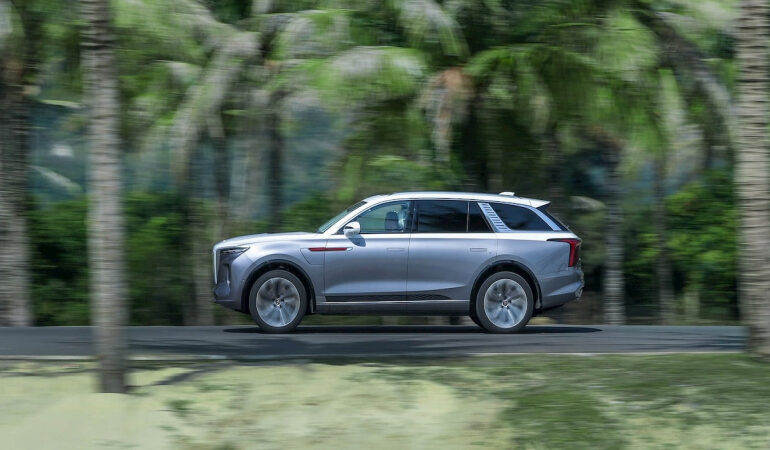
China has announced another major advance in electric vehicle battery technology, with researchers developing an ultra high energy density cell capable of delivering more than 1,000 kilometers of driving range on a single charge under CLTC standards. The development strengthens China’s leadership in next generation battery science as global automakers compete to extend EV range and performance.
The breakthrough centers on a newly engineered electrolyte system that replaces oxygen atoms with fluorine, significantly improving structural stability and ion transport efficiency. According to lead scientist Chen Jun, an academician of the Chinese Academy of Sciences, laboratory tests showed the battery achieving energy density levels above 700 watt hours per kilogram. That figure would represent a dramatic leap beyond the approximate 350 watt hours per kilogram ceiling associated with most conventional liquid lithium batteries currently used in mass market EVs.
Cold weather performance has also shown notable improvement. At temperatures as low as minus 50 degrees Celsius, the battery maintained nearly 400 watt hours per kilogram, addressing one of the most persistent barriers to EV adoption in colder regions. Reduced efficiency in low temperatures has long limited consumer confidence, particularly in northern markets.
The battery leverages fluorinated hydrocarbon solvent molecules within a lithium fluorine chemistry system. Researchers say this design enhances ionic conductivity while preserving stability at ultra high energy densities. In practical terms, that could translate into lighter battery packs capable of delivering significantly longer driving ranges without proportional increases in size or weight.
In collaboration with FAW Group’s Hongqi brand and China Automotive New Energy Battery Technology Co Ltd, the team has also developed a version boasting around 500 watt hours per kilogram at the pack level. Vehicles equipped with this configuration are projected to exceed 1,000 kilometers of range per charge under China’s testing cycle. Company executives have indicated that mass production could begin by the end of 2026, pending further durability validation and safety certification.
China already dominates global EV battery supply chains, with leading manufacturers such as CATL and BYD accounting for a substantial share of worldwide sales. Continuous breakthroughs in energy density reinforce the country’s strategic position in the electrification race and strengthen its ability to supply both domestic and international automakers.
Beyond passenger vehicles, researchers suggest the new battery architecture could support intelligent robotics, aerospace applications, aviation systems, and operations in extreme climates. Higher energy density combined with improved thermal stability expands use cases in sectors where weight and reliability are critical.
Industry analysts caution that scaling laboratory results to commercial production remains a complex process involving safety testing, cost control, and long cycle durability trials. However, if commercialization targets are achieved, a 50 percent performance improvement over current mainstream technologies could reshape consumer expectations and competitive dynamics in the global EV market.
As electric mobility becomes central to decarbonization strategies worldwide, advances in battery chemistry continue to define the next phase of automotive innovation and industrial policy.