Xpeng CEO Urges China to Leap Ahead in Autonomous Driving at Two Sessions
China should move faster and skip an intermediate stage in the development of self driving cars, according to Xpeng founder and chief executive He Xiaopeng, who is calling for regulatory reform to accelerate the country’s push into advanced autonomous driving.
Speaking ahead of the annual Two Sessions meetings in Beijing, He said China’s electric vehicle sector must seize the opportunity to transition directly to higher level autonomous capabilities rather than progressing step by step. He plans to formally submit the proposal during the gatherings of the National People’s Congress and the Chinese People’s Political Consultative Conference, where he serves as a delegate.
He argued that as growth in China’s electric vehicle market begins to moderate after years of rapid expansion, intelligent driving systems could become the next major engine of industry development. By accelerating progress toward more advanced autonomy, he suggested, Chinese manufacturers could strengthen global competitiveness and open new commercial pathways.
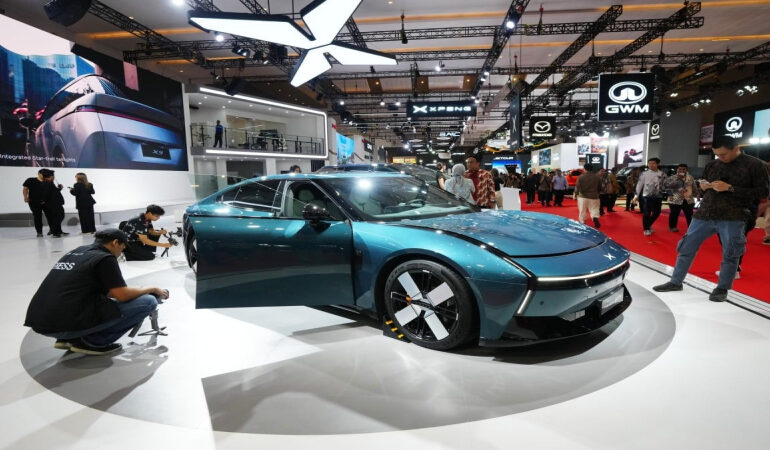
Xpeng, officially known as XPeng, has positioned itself as a technology focused automaker with heavy investment in driver assistance software, artificial intelligence algorithms and in house chip development. The company’s latest models, including the Next P7 showcased at international auto events, emphasize integrated smart driving features and over the air software updates.
He’s remarks come at a time when competition in China’s EV sector remains intense. Major domestic players such as BYD and global manufacturers like Tesla are also racing to refine advanced driver assistance and automated driving technologies. While many vehicles on Chinese roads today operate at Level 2 or Level 2 plus automation, fully autonomous Level 4 and Level 5 systems remain under testing and regulatory evaluation.
According to He, regulatory frameworks need to evolve more quickly to support large scale road testing, clearer liability standards and broader data sharing mechanisms. He suggested that faster policy adjustments would enable companies to gather the real world driving data required to train more capable autonomous systems.
The annual Two Sessions meetings are widely viewed as a key moment for setting China’s economic and technological priorities for the year. Proposals from industry leaders often shape discussions around industrial policy, digital infrastructure and advanced manufacturing. Autonomous driving has been identified in previous policy documents as a strategic emerging industry tied to artificial intelligence and smart transportation networks.
China already hosts some of the world’s largest pilot zones for intelligent connected vehicles, with cities such as Beijing, Shanghai and Shenzhen granting permits for robotaxi trials and highway testing. However, nationwide deployment of higher level autonomous vehicles remains limited by regulatory caution and safety considerations.
He’s proposal reflects a broader belief within parts of China’s technology sector that the country can leapfrog stages of development by combining strong manufacturing capacity with rapid software innovation. Whether policymakers will embrace a faster transition to advanced autonomy is likely to become clearer as discussions unfold during this year’s legislative sessions.