China’s 15th Five-Year Plan Focuses on AI Fusion Energy and Defence Technology
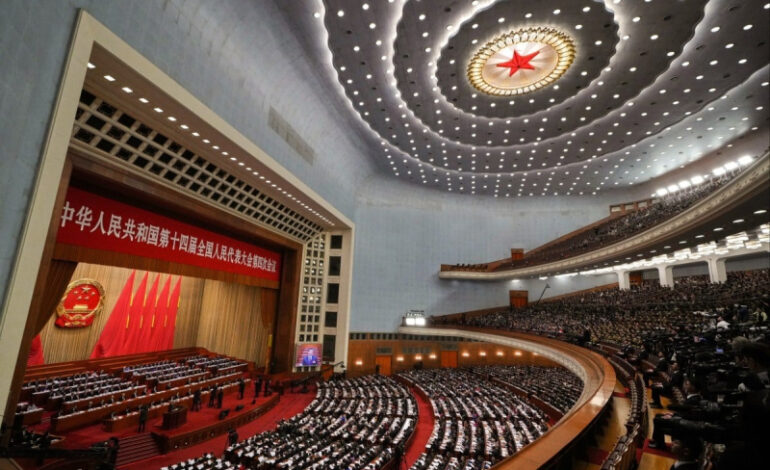
China has outlined an ambitious technology focused development strategy in its draft 15th five year plan covering the period from 2026 to 2030. The blueprint was presented as senior lawmakers and political advisers gathered in Beijing for the country’s annual national policy meetings. The plan places strong emphasis on strengthening China’s position in critical technologies while addressing vulnerabilities in global supply chains. Artificial intelligence, advanced energy systems and national defence innovation are among the sectors expected to receive major policy support as China seeks to strengthen long term technological resilience.
The five year plan is widely seen as a key roadmap guiding China’s economic and industrial strategy over the next decade. Policymakers say the new blueprint reflects a changing global environment in which technological competition and geopolitical tensions are increasingly shaping national priorities. Authorities aim to strengthen domestic capabilities in critical sectors to ensure stability in the face of external disruptions. The strategy focuses on developing homegrown innovation ecosystems capable of supporting China’s ambitions in areas such as computing infrastructure, scientific research and next generation manufacturing.
Artificial intelligence has been identified as one of the central pillars of the new development plan. Chinese authorities are expected to expand investments in advanced computing systems, machine learning research and data driven industrial applications. AI technologies are increasingly viewed as foundational infrastructure for economic modernization, supporting industries ranging from healthcare and manufacturing to transportation and digital services. By accelerating development in this field, China hopes to maintain competitiveness in the global technology race while enabling more efficient and intelligent industrial production.
Another major focus of the blueprint is fusion energy research, a field widely regarded as a potential breakthrough in long term clean energy generation. Fusion technology aims to replicate the same nuclear reaction that powers the sun, producing vast amounts of energy with minimal environmental impact. Chinese scientists have already made notable progress in fusion experiments through several large scale research facilities. The inclusion of fusion energy as a national priority highlights the government’s interest in securing future energy independence while advancing next generation scientific research.
Defence technology and national security capabilities also play an important role within the new five year strategy. Officials have signaled plans to strengthen research in advanced defence systems, cyber security and space related technologies. As geopolitical tensions continue to influence global security dynamics, China is seeking to enhance its technological capabilities in areas that support both military modernization and strategic infrastructure protection. Analysts say this approach reflects Beijing’s broader goal of ensuring technological self sufficiency across critical sectors.
Beyond specific technologies, the plan suggests that policymakers are preparing for potential economic disruptions caused by geopolitical tensions, trade disputes or regional security challenges. Authorities are expected to strengthen resilience across supply chains and strategic industries to ensure economic stability during periods of global uncertainty. Measures could include strengthening domestic manufacturing capabilities and supporting research programs aimed at overcoming technological bottlenecks in sectors where China currently depends on foreign suppliers.
The unveiling of the 15th five year plan during the national policy meetings highlights how central technology development has become to China’s long term national strategy. Government planners are focusing on a wide range of emerging sectors that could shape global innovation in the coming decades. With continued investment in artificial intelligence, advanced energy research and defence related technologies, the plan outlines a broad framework designed to guide China’s next phase of technological and industrial transformation.