China Plans Stronger Maritime Policing in Disputed Waters Under New Five Year Blueprint
China is planning to strengthen maritime law enforcement and expand its presence in disputed waters as part of its latest national development strategy covering the period from 2026 to 2030. The initiative forms part of the country’s new five year policy blueprint that outlines priorities for economic development, national security and international engagement. Officials say the plan includes stronger legal mechanisms and enforcement capabilities aimed at protecting China’s maritime interests while also shaping international governance frameworks related to ocean resources and navigation rights.
The new policy direction highlights Beijing’s intention to reinforce its legal and institutional structures for maritime administration. Authorities have indicated that maritime law enforcement agencies will play a greater role in monitoring and managing contested areas, particularly in regions where territorial claims overlap with those of neighboring countries. Officials say strengthening legal frameworks will allow China to respond more effectively to disputes involving fishing rights, resource exploration and navigation activities in waters considered strategically important.
Maritime law enforcement has become an increasingly important element of China’s national strategy as competition over sea resources intensifies across the Asia Pacific region. The South China Sea and surrounding waters are among the world’s most heavily contested maritime zones, with multiple countries asserting overlapping claims. These areas are also vital shipping routes for global trade and contain significant energy and fishing resources. Governments across the region have increased patrols and monitoring activities as tensions over maritime boundaries continue to shape regional diplomacy.
China’s new policy blueprint also signals a broader ambition to play a larger role in shaping international maritime governance. Policymakers believe that strengthening the country’s legal frameworks and enforcement capabilities will enable Beijing to participate more actively in developing global maritime rules. Officials have emphasized the importance of improving regulatory systems related to maritime safety, environmental protection and resource management while aligning domestic laws with evolving international standards.
The expansion of maritime policing is closely linked to China’s wider economic and strategic interests. Maritime trade routes remain critical for the country’s export driven economy, and protecting shipping lanes has become a key priority for policymakers. Strengthening law enforcement capacity in coastal and offshore regions is expected to support maritime security while also safeguarding fisheries, offshore energy exploration and infrastructure projects that form part of China’s long term development goals.
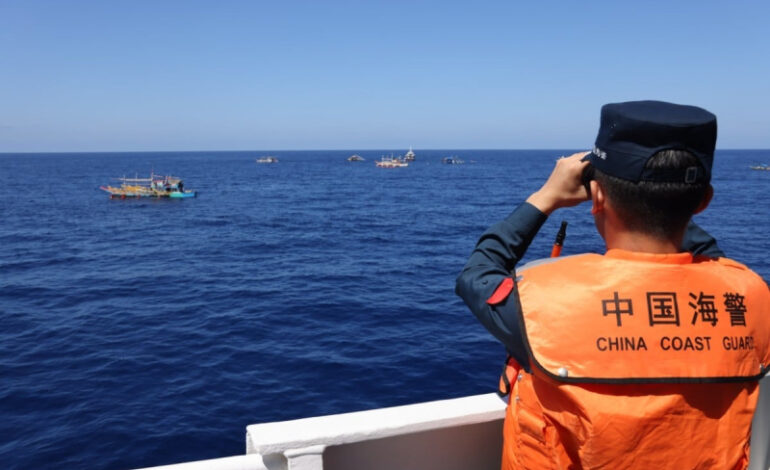
Regional analysts note that maritime enforcement operations increasingly involve a combination of coast guard patrols, surveillance systems and legal measures designed to reinforce territorial claims. In recent years China has expanded the capabilities of its coast guard and maritime agencies, allowing them to operate more frequently in contested waters. Officials say improved coordination between maritime authorities will help maintain order in busy sea lanes while also supporting the protection of national maritime interests.
China’s new five year plan places strong emphasis on strengthening governance across a wide range of sectors, including maritime administration. By expanding law enforcement capabilities and developing stronger regulatory systems, authorities aim to enhance the country’s ability to manage maritime activities in an increasingly complex regional environment. The strategy also reflects Beijing’s view that effective maritime governance is essential for economic stability, environmental protection and long term strategic security.