China’s chip industry calls for stronger state backing to accelerate AI dominance
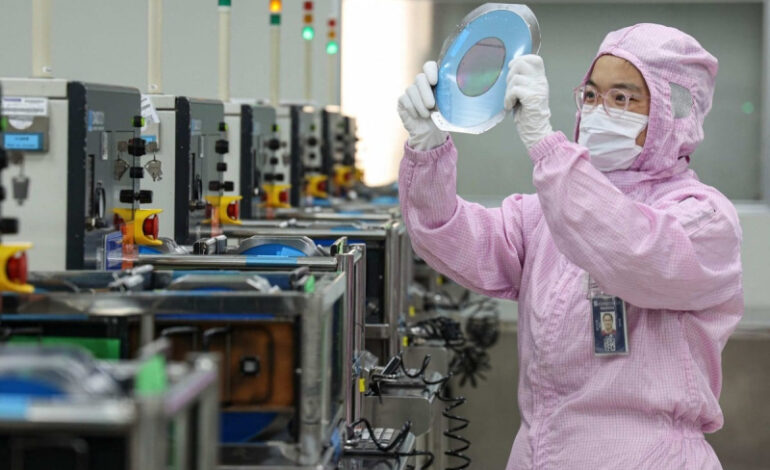
China’s semiconductor sector is urging the government to expand financial and policy support for artificial intelligence chips and critical semiconductor materials as the country intensifies efforts to strengthen its technological independence. Industry experts, researchers and technology executives raised the issue during the recent annual policy meetings in Beijing, where China’s top legislative and advisory bodies gather to discuss economic priorities. Participants said the rapid development of artificial intelligence is reshaping global competition in computing power and advanced chips. They believe China must accelerate domestic innovation in AI processors and materials to maintain momentum in the global technology race.
Representatives from the semiconductor industry said stronger state coordination could help Chinese companies speed up the commercialization of artificial intelligence chips and reduce reliance on foreign technologies. Artificial intelligence systems rely on high performance computing infrastructure that processes vast volumes of data through specialized chips deployed in large data centers. Industry voices argued that expanding domestic chip capacity and improving supply chains would help China secure long term leadership in emerging technologies. They also pointed to China’s existing advantages in certain raw materials used in semiconductor production, saying these resources could support a stronger domestic manufacturing ecosystem.
Researchers involved in advanced computing projects also highlighted the rising cost of artificial intelligence computing power, which has become a critical resource for companies developing large language models and other advanced AI systems. Some experts suggested that government oversight could help stabilize pricing in data center computing markets and encourage broader access for startups and research institutions. Artificial intelligence computing power is delivered through specialized chips that perform complex calculations at high speeds. Industry leaders said ensuring affordable access to these resources will be essential if China wants to scale its domestic AI industry and compete with global technology leaders.
China has already invested heavily in its semiconductor sector in recent years, establishing national funds and incentives designed to strengthen domestic chip manufacturing. The push gained urgency after restrictions on advanced semiconductor exports limited access to some high end chip technologies. Policymakers have since prioritized building a more resilient semiconductor ecosystem that includes design, manufacturing, materials and equipment. Experts say artificial intelligence is now emerging as the next major battleground in this effort. Expanding AI chip capabilities could strengthen China’s position in cloud computing, robotics, smart manufacturing and next generation digital infrastructure.
The discussions during the policy meetings reflect growing awareness among Chinese technology leaders that computing power will shape the future of economic growth and national competitiveness. Artificial intelligence applications are expanding rapidly across sectors including autonomous vehicles, healthcare, finance and logistics. Semiconductor companies are now focusing on designing processors optimized specifically for AI workloads, which require massive parallel computing capabilities. Analysts say China’s ability to combine chip development with large scale AI deployment could play a decisive role in determining how quickly the country advances in the global technology landscape.