Iran Leader Signals Strait of Hormuz Closure as Regional Tensions Escalate
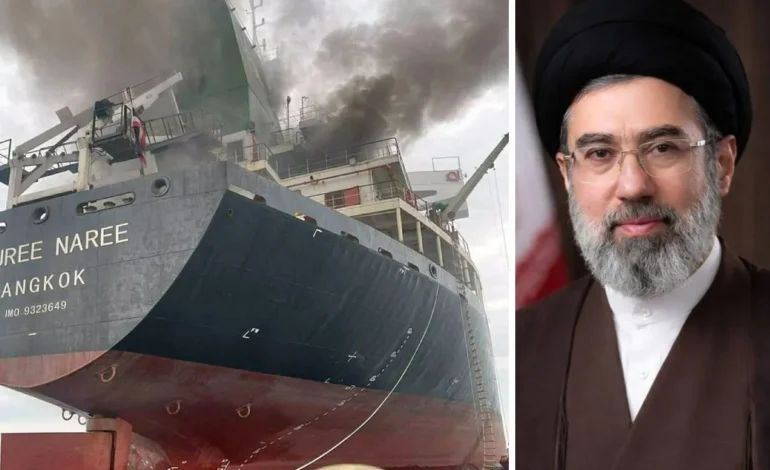
Iran’s new supreme leader Mojtaba Khamenei has warned that the Strait of Hormuz should remain closed and vowed to respond forcefully against United States military presence in the region. In his first major public statement since assuming leadership, Khamenei said Iran would continue to use control over the strategic waterway as leverage during the ongoing confrontation. The Strait of Hormuz is one of the world’s most critical energy corridors and carries roughly one fifth of global oil shipments. His comments immediately raised concerns across international energy markets as governments and shipping companies monitored the situation closely.
The statement came after a series of escalating incidents in the Gulf region that have intensified tensions between Iran and Western powers. Iranian forces have recently targeted vessels moving through the Strait, including a cargo ship that caught fire after reportedly being struck by missiles while sailing through the narrow channel. The attack highlighted the growing risks to maritime traffic in the area which serves as a vital route for oil exports from major producers in the Middle East. Energy analysts warned that continued disruption in the waterway could affect global energy prices and shipping routes.
In his remarks Khamenei said Iran would continue to apply pressure by controlling access through the Strait of Hormuz which connects the Persian Gulf with international shipping lanes. He argued that restricting movement through the passage could serve as a powerful strategic tool in Iran’s confrontation with the United States and its allies. The Iranian leader also called on Gulf states hosting American military installations to reconsider their security partnerships. According to the statement regional governments should move quickly to close US military bases, claiming that Washington’s presence has not delivered stability in the region.
The comments represent one of the strongest public signals from Tehran since the recent leadership transition that placed Mojtaba Khamenei in the country’s highest political and religious position. Iranian officials have repeatedly framed their position as a response to foreign pressure and military deployments around the Gulf. However the latest remarks have raised alarm among international observers who fear that continued threats to the Strait of Hormuz could escalate into a broader regional crisis. Governments across Asia and Europe depend heavily on oil shipments that pass through the narrow waterway.
Global shipping companies and energy traders reacted cautiously to the statement as they evaluated the potential impact on supply chains. The Strait of Hormuz is one of the most heavily used maritime chokepoints in the world with oil tankers transporting millions of barrels of crude every day. Any prolonged closure or disruption would likely force tankers to reroute shipments while raising transportation costs and insurance risks. Analysts noted that even temporary interruptions can trigger volatility in global energy markets due to the strategic importance of the corridor.
The region has experienced several maritime security incidents in recent months as geopolitical tensions have intensified. Military patrols from multiple countries have increased their presence around the Gulf in an attempt to protect commercial shipping routes. International observers say that the combination of political confrontation and military activity has created a fragile security environment in the waterway. The Strait is only about thirty kilometers wide at its narrowest point which makes shipping lanes particularly vulnerable to disruption.
Iran has long viewed control over the Strait of Hormuz as a key strategic advantage because of its influence over global energy flows. Iranian leaders have previously warned that the country could block the passage in response to sanctions or military pressure. While such threats have surfaced during earlier periods of tension they have rarely been carried out on a sustained basis due to the severe economic and geopolitical consequences that would likely follow.
Diplomatic efforts by international actors are continuing behind the scenes as governments attempt to prevent the situation from escalating further. Energy importing nations are monitoring developments carefully while urging restraint from all sides. Markets and policymakers remain focused on whether tensions around the Strait will stabilize or if the strategic waterway could become the center of a larger geopolitical confrontation in the coming weeks.