US Report Warns China Nuclear Warhead Storage Concentration Could Create Strategic Risk
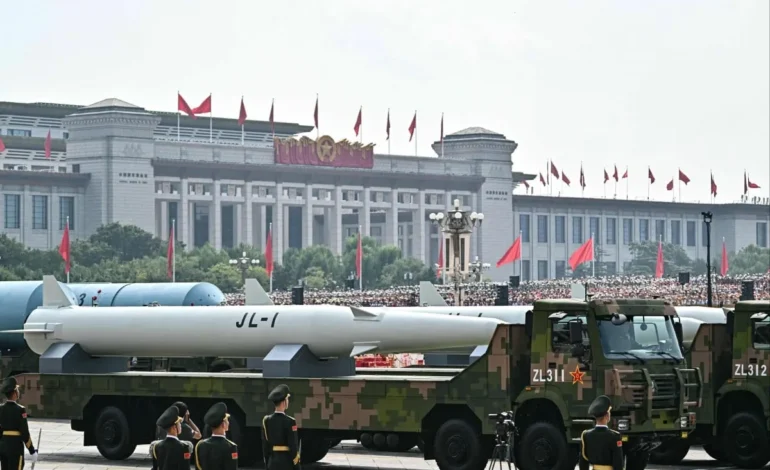
A new report from a United States military research institute has suggested that the majority of China’s nuclear warheads may be stored at a single centralized facility in the country’s northwest, potentially creating a strategic vulnerability in the event of a conflict. The assessment was published by the China Aerospace Studies Institute at the US Air University and focuses on the structure and logistics of China’s nuclear weapons management. According to the report, the concentration of warheads at one primary location could expose a large portion of the country’s nuclear deterrent to risk if the site were targeted during a military confrontation.
Researchers involved in the study examined publicly available satellite imagery and open source intelligence to analyze how China manages its nuclear arsenal. The findings indicate that many warheads appear to be stored at a facility known as Base 67, also referred to as Hongchuan, which is believed to be located deep within the Qinling mountain region. The site is reportedly connected to China’s People’s Liberation Army Rocket Force, the military branch responsible for operating the country’s strategic missile systems. Analysts said the centralized storage approach may reflect long standing logistical and command structures within China’s nuclear program.
The report argues that storing a large portion of the nuclear stockpile in one location could pose risks during a crisis if adversaries were able to identify and target the facility. In nuclear strategy the survivability of weapons systems is considered critical to maintaining deterrence because it ensures that a country retains the ability to respond even after a potential attack. Analysts noted that many nuclear powers distribute warheads across multiple sites or deploy them with operational missile units in order to reduce the chances of a single strike affecting a large share of their arsenal.
China has been expanding and modernizing its nuclear capabilities in recent years as part of broader military development programs. Satellite imagery and intelligence assessments from several research organizations suggest that the country has been constructing new missile silos and upgrading its delivery systems. These developments have drawn increasing attention from defense analysts who are studying how China’s nuclear posture may evolve in response to changing global security dynamics and the modernization efforts of other nuclear armed states.
The People’s Liberation Army Rocket Force plays a central role in China’s nuclear strategy and operates a range of ballistic missile systems capable of delivering nuclear warheads. These include land based intercontinental missiles as well as medium range systems designed for regional deterrence. The command structure of the Rocket Force oversees missile deployment units and logistical facilities that support the storage, transport and maintenance of warheads. Analysts believe the centralized storage system may be intended to maintain tight control over the nuclear arsenal while ensuring that warheads remain separated from missile systems during peacetime.
The Qinling mountain region where the reported storage facility is located is known for its rugged terrain and network of underground infrastructure that could offer protection from surveillance and potential attacks. Military planners often select remote mountainous areas for strategic facilities because the terrain provides natural cover and allows for the construction of hardened underground storage complexes. According to defense specialists such locations can complicate detection and targeting efforts by adversaries while providing additional security for sensitive military assets.
International discussions about China’s nuclear program have intensified as governments and analysts attempt to understand how rapidly the country’s arsenal is expanding. Some reports from Western research groups estimate that China’s stockpile has grown in recent years although exact numbers remain uncertain due to the limited public disclosure surrounding the program. Beijing has historically maintained a policy of minimum nuclear deterrence while emphasizing that its weapons are intended primarily to prevent nuclear attack rather than support offensive operations.
The publication of the report has added another layer to ongoing debates about nuclear stability and strategic balance between major powers. Security analysts say understanding how nuclear forces are structured and managed is important for evaluating risks during periods of geopolitical tension. As global military competition continues to evolve research institutions and governments are likely to continue examining the development of China’s nuclear capabilities and the implications for international security frameworks.