China Approves First Implantable Brain Computer Interface as Neuracle Advances Neurotechnology
China has approved its first implantable brain computer interface system, marking a major step in the country’s expanding neurotechnology sector. The device was developed by Neuracle Medical Technology and is designed to help patients with spinal cord injuries regain control of hand movements. The approval represents a regulatory milestone for the emerging industry and signals stronger institutional support for brain machine interface research in China. As global competition intensifies in advanced medical technologies, the development highlights how Chinese research groups and technology start ups are moving quickly to establish capabilities in areas that combine neuroscience, artificial intelligence and robotics.
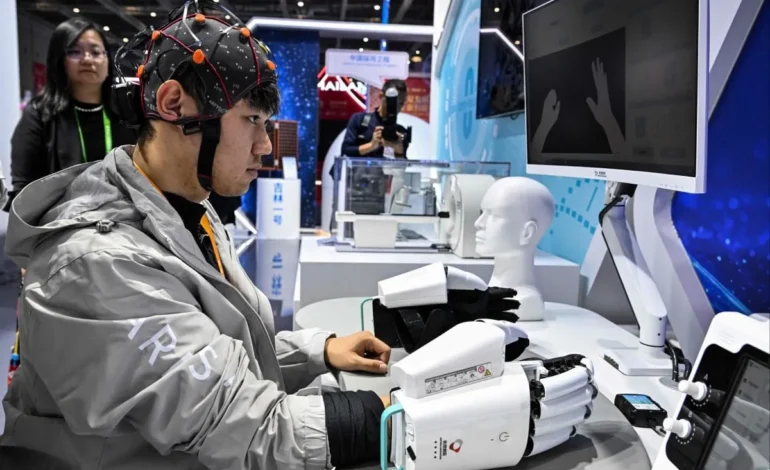
The newly approved system works by implanting electrodes that detect neural signals from the brain and translate them into commands capable of controlling external devices. These signals can then be used to assist patients in performing motor tasks that have been lost due to spinal cord damage. Researchers involved in the project say the technology could allow individuals with severe paralysis to regain partial independence in daily activities. Early clinical results suggest the interface can successfully decode motor intentions from brain signals and convert them into movements of robotic or assisted mechanical systems designed to mimic hand motion.
Brain computer interfaces have become one of the most closely watched frontiers in medical innovation. The technology aims to create direct communication pathways between the human brain and digital systems. Global technology companies and research institutions are investing heavily in the field because of its potential to transform treatment for neurological disorders. In China the sector has expanded rapidly over the past few years as venture capital investment and government research initiatives have supported start ups working on neural sensing technologies, implantable devices and artificial intelligence systems that interpret brain signals with increasing accuracy.
The progress made by Neuracle also reflects broader confidence within China’s medical technology ecosystem. Several domestic brain computer interface developers are now emerging as serious participants in the global race to develop next generation neural implants. Analysts note that regulatory approval for a fully implantable device represents a critical step that can accelerate further clinical testing and commercialization. Market reaction on Chinese exchanges suggested strong investor interest in the sector, with shares of companies connected to neural interface technologies rising sharply following news of the approval.
Beyond medical rehabilitation, brain computer interfaces are increasingly seen as part of a wider technological shift that links neuroscience with robotics, computing and artificial intelligence. Research teams believe that improvements in neural decoding algorithms and microelectrode design could eventually allow more precise control of prosthetic limbs, assistive robots and digital devices. Scientists are also exploring whether similar systems might be used to help treat neurological conditions such as epilepsy or Parkinson’s disease. The approval of the Neuracle implant therefore signals not only progress in medical treatment but also the emergence of a new technology platform.
China’s policy environment has played an important role in accelerating research in this field. National research programs have prioritized advanced biotechnology and medical devices as strategic sectors capable of strengthening both healthcare capabilities and technological independence. Universities, research institutes and private companies are collaborating more closely as the government promotes innovation in neuroscience and digital health. The brain computer interface sector fits into broader efforts to expand China’s leadership in emerging technologies ranging from robotics and artificial intelligence to precision medicine and advanced semiconductor design.
The approval arrives at a time when competition in neural interface development is intensifying globally. Several international companies are working on similar technologies that aim to restore movement or communication for patients with severe neurological injuries. China’s progress in this area suggests that the country intends to play a leading role in shaping the next phase of brain machine interface innovation. With further clinical trials expected and investment continuing to flow into the sector, the country’s neurotechnology ecosystem is likely to expand rapidly in the coming years as scientists and engineers refine systems capable of translating brain signals into real world actions.