China AI Chipmaker Cambricon Announces First Dividend After Turning Profitable in 2025
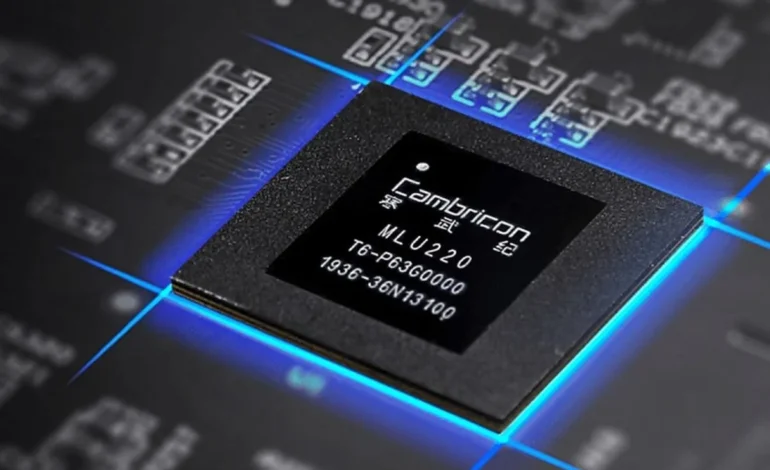
Chinese semiconductor designer Cambricon Technologies has announced plans to distribute its first ever dividend after reporting a full year profit for 2025, marking a significant milestone for the company often described as a domestic alternative to leading global chipmakers. The Beijing based firm has become one of China’s most closely watched artificial intelligence chip developers as the country seeks to strengthen its semiconductor capabilities amid intensifying technology competition. The decision to reward shareholders follows a period of strong financial improvement that signals growing demand for locally developed AI acceleration hardware across China’s technology sector.
According to company filings, Cambricon plans to distribute a cash dividend of 15 yuan for every 10 shares held by investors. The payout would total more than 632 million yuan if approved by shareholders at the upcoming meeting. In addition to the dividend plan the company intends to allocate another 20 million yuan toward share buybacks, bringing the combined capital distribution to approximately 652 million yuan. The payout represents close to one third of the company’s net profit for 2025 and reflects increasing confidence among management that its business model is entering a more stable phase after years of heavy investment in research and development.
Cambricon has emerged as one of China’s most important artificial intelligence chip designers as the country accelerates efforts to build domestic semiconductor capacity. The company focuses on AI acceleration processors that are used to train and run machine learning models in data centers and intelligent computing systems. These chips are designed to perform the large scale calculations required for artificial intelligence workloads more efficiently than traditional processors. Demand for such hardware has grown rapidly as Chinese technology companies expand their use of AI in cloud computing platforms, autonomous systems and data analysis applications.
The company’s progress is being closely watched by investors and policymakers because it reflects broader efforts by China to reduce reliance on foreign semiconductor technology. Over the past few years the country has prioritized domestic chip development as a strategic industry capable of supporting artificial intelligence research, advanced manufacturing and digital infrastructure. Firms such as Cambricon have received strong interest from both private investors and state backed funds as China attempts to build a more resilient semiconductor supply chain capable of supporting its expanding technology ecosystem.
Cambricon was founded by a group of computer scientists who previously worked on AI processor architecture research and later developed specialized chips tailored for machine learning applications. Since its public listing in Shanghai in 2020 the company has invested heavily in product development and computing architecture. Although the early years after its listing were marked by significant research spending and fluctuating earnings, the latest results suggest the company is entering a period of stronger commercial adoption as Chinese enterprises increasingly deploy AI powered infrastructure.
The rise of Cambricon also reflects the growing demand for advanced computing hardware in China’s artificial intelligence industry. Technology companies across sectors including cloud services, finance and manufacturing are building larger AI computing clusters to support data analysis and intelligent automation. Domestic chip developers are therefore under pressure to deliver competitive alternatives that can power these systems. Analysts say companies capable of producing high performance AI processors could benefit from rising demand as China continues to expand its artificial intelligence capabilities.
The planned dividend distribution signals confidence that Cambricon’s financial position has strengthened as its AI chip products gain broader adoption. Investors are expected to closely monitor the company’s next phase of development, particularly its ability to compete with global semiconductor leaders while supporting China’s long term strategy of technological self reliance. As artificial intelligence becomes a central driver of digital innovation, companies that produce the specialized chips required to power these systems are likely to remain at the center of China’s technology ambitions.