China’s Humanoid Robot Development Accelerates as Manufacturing Automation Enters a New Phase
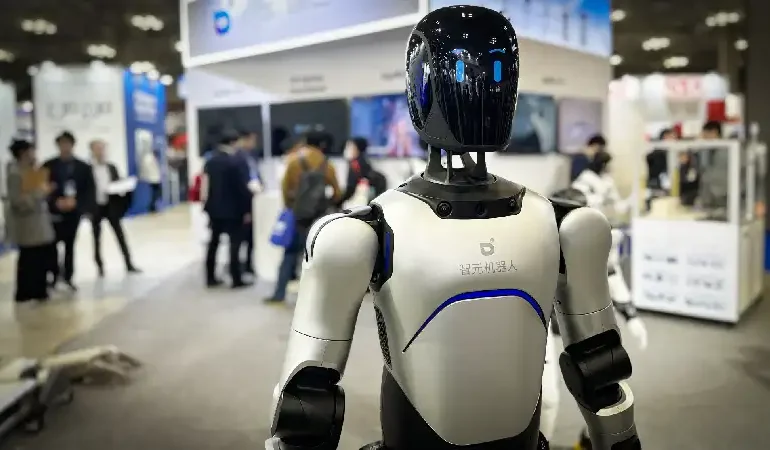
China’s robotics sector is entering a new phase in 2026 as research into humanoid robots begins moving from laboratory experimentation toward industrial applications. Robotics companies, technology startups, and manufacturing enterprises are investing heavily in next generation robotic systems designed to perform tasks previously limited to human workers. While traditional industrial robots have long been used in assembly lines and automated production systems, humanoid robots represent a more flexible category of automation technology capable of operating in dynamic environments. The acceleration of humanoid robotics development reflects China’s broader push to advance intelligent manufacturing and strengthen the country’s position in global automation innovation.
Humanoid Robotics Moves Toward Industrial Applications
Humanoid robots are designed to resemble the physical structure and movement capabilities of humans, allowing them to perform tasks in environments originally designed for human workers. Unlike conventional robotic arms that operate within fixed production stations, humanoid robots can potentially navigate factory floors, handle tools, and assist with logistics operations inside industrial facilities.
Chinese robotics companies are increasingly exploring these capabilities as manufacturing industries seek more flexible automation solutions. Factories often require robots that can adapt to varying production requirements and operate safely alongside human employees. Humanoid robots may provide a practical way to extend automation into areas of manufacturing where traditional robots are less effective.
Although many humanoid robotics projects remain in early development stages, several companies are testing prototypes designed to support material handling, inspection tasks, and equipment monitoring within industrial environments. These early experiments highlight how humanoid robotics could complement existing automation systems rather than replace them entirely.
Integration with Artificial Intelligence Systems
Advancements in artificial intelligence are playing a critical role in the development of humanoid robots. Machine learning systems allow robots to analyze sensor data, recognize objects, and adjust their actions in response to changing conditions. These capabilities are essential for robots operating in complex environments where tasks cannot always be predefined through simple programming.
AI powered vision systems enable humanoid robots to identify tools, navigate factory layouts, and interact with equipment in a manner that resembles human operational behavior. The integration of artificial intelligence with robotics hardware allows machines to respond more intelligently to unpredictable circumstances.
Chinese research institutes and technology firms are therefore combining robotics engineering with AI software development to create more capable humanoid systems. This convergence of technologies reflects a broader trend within China’s innovation ecosystem where robotics, artificial intelligence, and advanced manufacturing technologies are increasingly interconnected.
Manufacturing Automation and Productivity
The expansion of humanoid robotics research is closely linked to China’s ongoing efforts to modernize manufacturing industries. Automation technologies allow factories to increase production efficiency while maintaining consistent quality standards. Humanoid robots could extend automation beyond repetitive assembly line tasks into areas such as warehouse logistics, maintenance operations, and flexible manufacturing processes.
Factories producing complex products often require a combination of automated machinery and skilled human workers. Humanoid robots may eventually support these operations by assisting with tasks that require mobility and manual dexterity. By reducing labor intensive processes and improving operational consistency, humanoid robotics could contribute to higher productivity within advanced manufacturing sectors.
Industrial automation also helps companies manage operational challenges such as rising labor costs and increasing product complexity. As production systems evolve, flexible robotic technologies are becoming increasingly valuable for maintaining efficient manufacturing operations.
Domestic Robotics Industry Expansion
China’s robotics industry has grown rapidly over the past decade as manufacturers invest in automation technologies to improve competitiveness. Domestic robotics companies now produce a wide range of equipment including robotic arms, collaborative robots, and automated transport systems.
Humanoid robotics research represents the next frontier for this industry. Several Chinese technology firms are developing humanoid platforms capable of operating in industrial environments. Although commercialization timelines remain uncertain, continued investment in robotics research is expected to strengthen China’s capabilities in advanced automation technologies.
Universities and research institutes also play an important role in robotics innovation by conducting experiments in motion control systems, sensor technologies, and artificial intelligence algorithms. Collaboration between academic researchers and industrial manufacturers helps accelerate technological progress within the robotics sector.
Global Competition in Robotics Innovation
Humanoid robotics development is becoming an area of global technological competition as countries invest in next generation automation systems. Companies in multiple regions are exploring how humanoid robots can support industries ranging from manufacturing to healthcare and logistics.
China’s rapid progress in robotics research reflects its broader strategy to expand leadership in advanced technology sectors. By investing in robotics engineering, artificial intelligence, and manufacturing infrastructure, Chinese companies aim to develop automation systems capable of competing in global technology markets.
While humanoid robotics remains an emerging field, ongoing research efforts suggest that these machines may eventually play a significant role in future industrial environments. Their ability to adapt to complex tasks could transform how automation is applied across a wide range of economic sectors.
Conclusion
China’s accelerating development of humanoid robots signals a new stage in the evolution of manufacturing automation. As robotics engineering and artificial intelligence technologies converge, humanoid systems may expand the scope of industrial automation and contribute to the next generation of intelligent manufacturing capabilities.