Nvidia’s AI Inference Push Reshapes Competitive Landscape for China’s Chip Industry
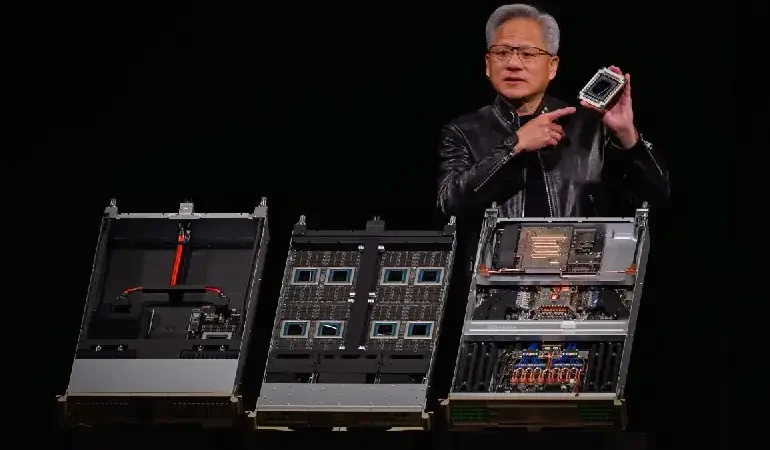
Nvidia’s latest push into artificial intelligence inference has introduced a new phase in the global semiconductor race, presenting both opportunities and challenges for China’s technology ecosystem. At its annual GTC conference, the company unveiled a new language processing unit designed to accelerate inference workloads, a critical component for powering next generation AI applications. The development reflects a broader shift in the industry as companies move beyond training models to deploying real time AI systems, intensifying competition in a segment where performance, efficiency and scalability are becoming decisive factors.
The newly introduced chip focuses on low latency and high speed memory capabilities, enabling faster execution of tasks required by AI agents and enterprise level applications. By targeting inference, Nvidia is positioning itself at the center of a rapidly expanding market driven by automation, intelligent assistants and real world deployment of AI systems. The company also signaled a strategic shift by integrating multiple processing components into unified computing platforms, offering what it describes as complete AI infrastructure solutions rather than standalone hardware products. This approach is expected to reshape how enterprises build and scale AI operations globally.
For China, Nvidia’s evolving strategy presents a complex scenario shaped by both technological ambition and regulatory constraints. Chinese firms have made significant progress in AI development, particularly in software and application layers, but continue to face limitations in accessing advanced semiconductor technologies due to export controls. As inference becomes more central to AI deployment, the gap in hardware capabilities could influence how quickly Chinese companies scale advanced AI services. At the same time, the emphasis on inference may create new openings for domestic chipmakers to focus on efficiency driven designs tailored to local market needs.
Industry analysts note that the rise of AI agents and real time decision systems is driving demand for specialized chips optimized for inference rather than traditional training workloads. This trend could benefit companies that are able to deliver cost effective and scalable solutions, even if they do not match the absolute performance of leading global products. In China, this may encourage increased investment in alternative architectures and localized innovation, particularly as companies seek to reduce reliance on foreign technology while maintaining competitiveness in AI driven sectors such as cloud computing, robotics and smart manufacturing.
The concept of integrated AI systems, combining multiple types of processors into unified platforms, also signals a broader transformation in how computing infrastructure is designed. Instead of focusing on individual components, companies are now building end to end systems capable of handling complex workloads across training, inference and deployment. This shift aligns with growing demand from enterprises seeking turnkey solutions that can support large scale AI adoption without requiring extensive customization. For China’s technology firms, adapting to this model will be essential to remain competitive in both domestic and international markets.
At the same time, the global AI race is becoming increasingly defined by strategic competition, where technological leadership intersects with policy and supply chain considerations. Nvidia’s advancements highlight the pace of innovation in the sector, while also underscoring the challenges faced by countries navigating access to cutting edge technology. China’s response is likely to involve a combination of domestic investment, partnerships and targeted innovation aimed at building resilient capabilities in key areas of the semiconductor value chain.
As the focus of artificial intelligence shifts toward real world deployment and inference driven systems, the competitive landscape is expected to evolve rapidly. Companies that can deliver efficient, scalable and integrated solutions will play a central role in shaping the next phase of AI adoption. For China, Nvidia’s latest developments serve as both a catalyst for accelerated innovation and a reminder of the structural challenges that continue to define the global technology ecosystem.