Volkswagen Deepens China EV Strategy With Local Chips as Nvidia Role Diminishes
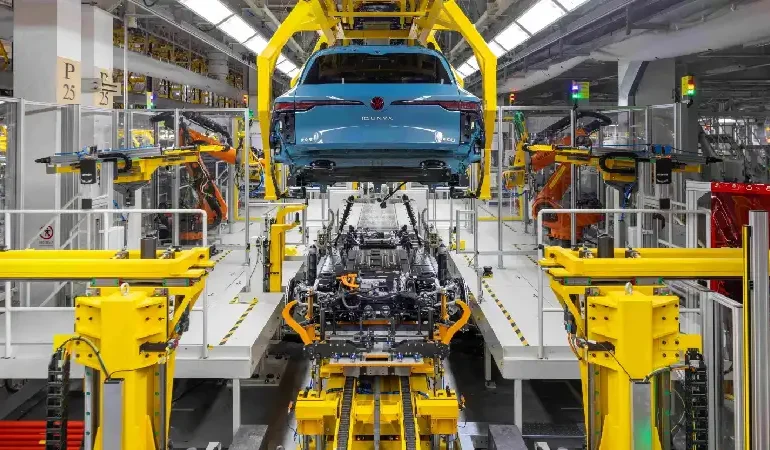
Volkswagen is accelerating its transition toward intelligent electric vehicles in China by shifting away from reliance on global chip suppliers and strengthening partnerships with local technology firms. The German automaker has begun production of its first all electric SUV in China using a domestically developed automotive chip, marking a strategic pivot in how it approaches software and semiconductor integration. The move reflects a broader effort to regain competitiveness in the Chinese market, where rapid innovation in smart vehicle technology is reshaping consumer expectations and industry standards.
The new vehicle integrates a driver assist system powered by a chip developed by Chinese electric vehicle company Xpeng, enabling advanced features such as highway navigation and urban driving support. This level of functionality aligns with China’s fast evolving automotive landscape, where intelligent driving capabilities are becoming a key differentiator. Volkswagen executives have indicated that local expertise in software and chip development is a major factor behind the shift, as the company prioritizes solutions that are tailored to China’s highly digital and connected consumer environment.
Volkswagen is also expanding its collaboration with domestic semiconductor firms through joint ventures focused on developing next generation automotive chips. One such partnership is working toward producing advanced chips designed specifically for intelligent driving systems, with timelines extending several years into the future. This localized approach allows the company to integrate hardware and software more effectively while reducing dependence on external suppliers, particularly in a market where speed of development and regulatory alignment are critical.
The decision to reduce reliance on established global chip providers highlights changing dynamics in the automotive technology sector. While companies like Nvidia have invested heavily in automotive chips, growth in that segment has faced challenges as Chinese manufacturers increasingly develop in house solutions. For Volkswagen, aligning with local partners provides access to proven driver assist technologies that are already deployed in China, enabling faster rollout of competitive features compared to building systems from scratch.
China’s electric vehicle market has become one of the most advanced globally, driven by strong domestic competition and high consumer expectations for digital integration. Automakers are now competing not only on performance and design but also on intelligence, connectivity and software capabilities. Volkswagen’s renewed focus on the region includes an ambitious product pipeline, with plans to launch a large number of new electric and hybrid models over the coming years as it seeks to rebuild market share lost to domestic rivals.
The company has also made significant investments in research and development within China, establishing major innovation centers and manufacturing hubs to support its transformation. These facilities are expected to play a central role in accelerating product development cycles and reducing costs, allowing Volkswagen to respond more quickly to market trends. The emphasis on local development underscores how global automakers are adapting to China’s unique ecosystem, where rapid iteration and technological integration are essential for success.
Looking ahead, Volkswagen expects to further enhance its driver assist capabilities, with plans to introduce more advanced systems that allow greater levels of automation under specific conditions. As regulatory frameworks evolve, these technologies could shift responsibility for certain driving functions from drivers to manufacturers, representing a significant change in the automotive landscape. The company’s strategy in China suggests that the future of mobility will be increasingly defined by intelligent systems powered by localized innovation and integrated digital platforms.