Tokenomics Emerges as Strategic Lever in China’s Race for AI Dominance
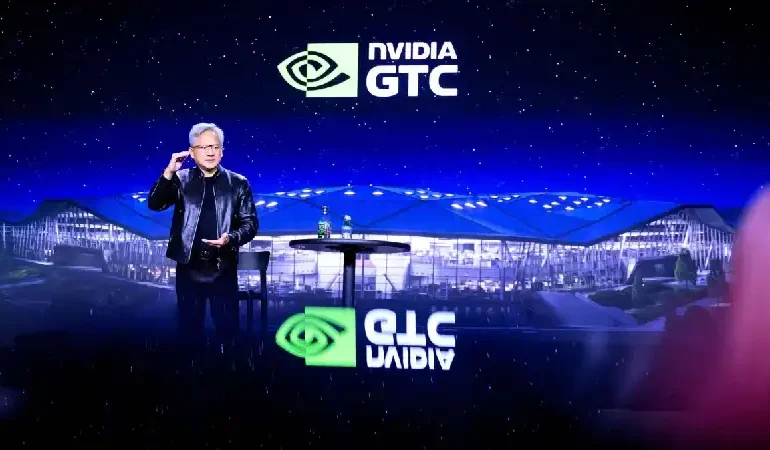
The concept of tokenomics is rapidly gaining traction as artificial intelligence reshapes global technology and economic systems, with industry leaders now framing tokens as the core unit of value in AI driven production. At a recent developer conference, Nvidia’s leadership described tokens as a new form of digital commodity, positioning AI systems as factories that generate measurable units of intelligence. This shift is influencing how companies and governments view the economics of artificial intelligence, as tokens increasingly represent the output of large language models and generative systems powering modern digital services.
Tokenomics in the AI context refers to how tokens are produced, distributed and monetized within an ecosystem. Each token represents a unit of processed data or generated output, such as text, images or code, created by AI models. As demand for AI applications grows, the ability to efficiently generate and manage tokens becomes a key competitive advantage. This has led to a broader understanding of AI infrastructure not just as computing power, but as an integrated system where energy, chips, algorithms and data pipelines collectively determine how effectively tokens can be produced at scale.
China is positioning itself strategically within this emerging token economy by focusing on multiple layers of the AI value chain. From expanding data center capacity to investing in domestic semiconductor production and training advanced models, the country is building a comprehensive ecosystem designed to maximize token generation and distribution. The idea of exporting tokens as a form of digital service is also gaining attention, where AI generated outputs could be delivered across borders as scalable products. This approach aligns with China’s broader efforts to strengthen technological self reliance while expanding its presence in global digital markets.
The framing of tokens as tradable goods introduces a new dimension to global competition in artificial intelligence. Instead of focusing solely on hardware or software leadership, countries are now competing on how efficiently they can convert computational resources into usable intelligence. This includes optimizing energy consumption, improving model performance and developing platforms that can deliver AI outputs to users in real time. In this environment, the ability to control the full production pipeline becomes critical, as it directly impacts cost efficiency and scalability.
China’s advantage may lie in its ability to integrate infrastructure and policy support across the AI ecosystem. The country has already demonstrated strength in manufacturing and large scale deployment, which can be extended to AI infrastructure such as data centers and cloud platforms. Combined with strong government backing and access to vast datasets, this creates conditions that support rapid growth in token production capacity. Companies within China are increasingly aligning their strategies with this model, focusing on building systems that can generate high volumes of AI output while maintaining cost efficiency.
At the same time, the global landscape remains highly competitive, with companies in the United States and other regions continuing to lead in advanced chip design and foundational AI research. Nvidia’s positioning of AI factories reflects a broader trend where leading firms are redefining how value is created in the digital economy. The emphasis on tokens highlights a shift toward output based metrics, where the success of AI systems is measured not just by capability but by the volume and quality of intelligence they can produce and deliver.
The emergence of tokenomics is also influencing how businesses adopt artificial intelligence across industries. Enterprises are increasingly evaluating AI solutions based on their ability to generate consistent and scalable outputs, making token efficiency a central consideration. This is driving demand for platforms that can optimize resource usage while delivering high performance results. As a result, both technology providers and policymakers are paying closer attention to how token based systems can support long term growth and competitiveness.
As discussions around token exports and AI production models continue to evolve, China’s coordinated approach across infrastructure, policy and industry positions it as a significant player in shaping the future of token driven economies. The ability to convert computational power into scalable digital output is becoming a defining factor in the global AI race, with tokenomics emerging as a central framework for understanding how value is created and distributed in the era of intelligent machines.