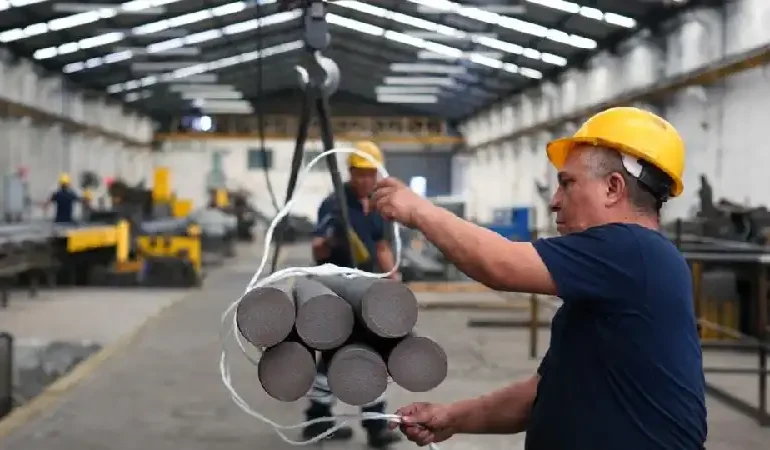
Australia and EU strike critical minerals deal to reduce reliance on China supply chains
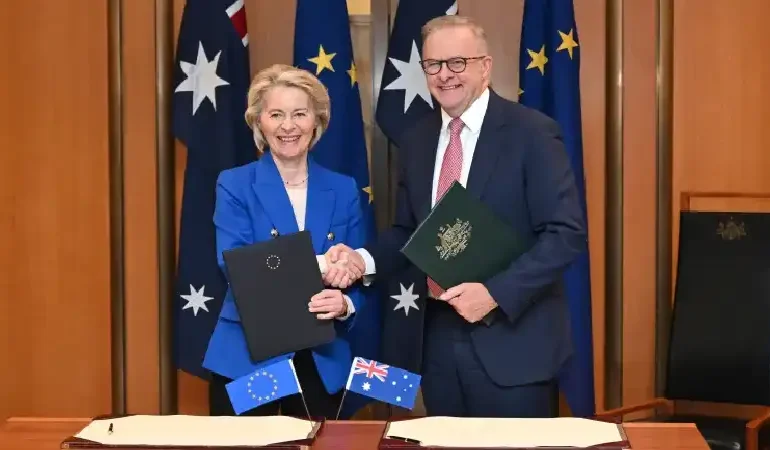
Australia and the European Union have finalized a major trade agreement aimed at strengthening cooperation in critical minerals and reducing dependence on China’s dominant supply chains. The deal removes tariffs on nearly all Australian exports of key resources, including rare earth elements that are essential for advanced technologies. The agreement comes amid growing concerns in Europe about supply security, particularly as geopolitical tensions and industrial competition increase pressure on access to strategic materials used in electric vehicles, batteries, and high tech manufacturing.
European Commission President Ursula von der Leyen described the partnership as a crucial step in securing stable supply chains, emphasizing that reliance on a single supplier poses risks to long term economic resilience. She noted that closer alignment between Europe and Australia would support shared strategic goals while ensuring access to materials critical for the energy transition and digital industries. Australian Prime Minister Anthony Albanese highlighted that the removal of tariffs would enhance trade flows and support economic growth, with the agreement expected to deliver significant value to Australia’s export sector.
The agreement reflects a broader shift among Western economies to diversify sourcing of rare earths and other critical minerals, sectors where China currently dominates global processing capacity. Estimates suggest that China controls a substantial share of refining and processing operations, giving it a strong position in global supply chains. This has prompted policymakers in Europe and elsewhere to seek alternative partnerships that can provide more secure and transparent access to these resources, particularly as demand continues to rise with the expansion of clean energy and advanced manufacturing industries.
Analysts view the deal as part of a wider effort to reshape global trade patterns in strategic sectors, with countries increasingly prioritizing supply chain resilience over cost efficiency alone. By deepening ties with resource rich partners like Australia, the European Union aims to reduce exposure to potential disruptions while supporting the development of diversified supply networks. The agreement also includes broader trade provisions, eliminating more than 99 percent of tariffs on EU goods exported to Australia, which is expected to boost bilateral trade and investment flows over the coming years.
Beyond minerals, the partnership is expected to strengthen economic integration between the two regions, with projections indicating significant growth in trade volumes over the next decade. European exports to Australia could see notable expansion, supported by reduced trade barriers and improved market access. The agreement builds on an already substantial economic relationship, with both sides maintaining strong trade and investment ties across multiple sectors, including goods, services, and infrastructure development.
The move also underscores how critical minerals have become a focal point in global economic strategy, particularly as countries compete to secure inputs for technologies such as electric vehicles, renewable energy systems, and advanced electronics. Governments are increasingly aligning trade policy with industrial objectives, using agreements like this to ensure long term access to essential materials while supporting domestic manufacturing ambitions. This shift is reshaping how trade partnerships are structured, placing greater emphasis on strategic resources.
Recent developments suggest that similar agreements may follow as countries seek to reduce reliance on concentrated supply chains and build more resilient global networks. Industry participants are closely monitoring how the EU Australia partnership evolves, particularly in terms of implementation and investment in processing capacity. As demand for critical minerals continues to grow, the agreement is expected to play a key role in shaping supply dynamics and trade flows across the global economy.