How Distributed Financial Orchestration Is Transforming Asia’s Next Generation Payment Systems
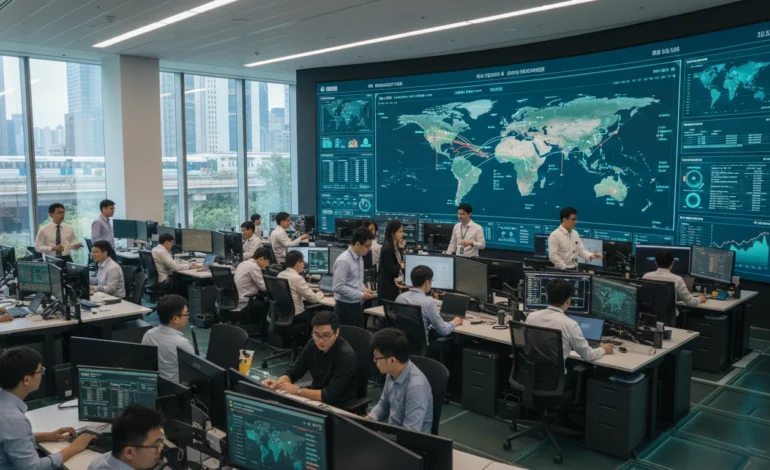
Asia’s payment systems are evolving as digital trade, real time platforms, and interconnected financial networks reshape how transactions are executed. Traditional payment infrastructure relies on sequential processing and centralized coordination. However, this approach often creates delays and limits flexibility in fast moving environments. As digital ecosystems expand, financial institutions are exploring distributed orchestration models that can coordinate transactions across multiple systems simultaneously. These models aim to improve efficiency, reduce friction, and support real time financial activity. Therefore, distributed financial orchestration is emerging as a key concept in building next generation payment systems across Asia’s fintech landscape.
From Centralized Control to Distributed Coordination
Conventional payment systems depend on centralized intermediaries that manage transaction processing and settlement. While this structure provides control, it can slow down execution and create bottlenecks. In contrast, distributed orchestration allows multiple systems to coordinate transactions through shared rules and data flows. As a result, payments can be processed more efficiently across networks. In addition, this approach improves resilience by reducing reliance on a single point of control. Therefore, financial institutions are increasingly shifting toward distributed models that better support real time and cross border payment activity.
Real Time Data and Transaction Synchronization
Modern payment systems generate continuous data streams from multiple sources, including trade platforms, banking networks, and digital services. These data flows allow transactions to be verified and executed in real time. Distributed orchestration uses this data to synchronize transaction processes across systems. As a result, payment execution becomes faster and more accurate. In addition, synchronization reduces discrepancies between financial and operational records. Therefore, institutions can improve liquidity coordination while maintaining compliance with regulatory requirements across different jurisdictions.
Multi System Coordination and Payment Efficiency
Payment processes often involve multiple systems, including banks, payment gateways, and financial platforms. Coordinating these systems manually can create inefficiencies and delays. Distributed orchestration introduces structured logic that connects these systems through automated workflows. As a result, transactions can be processed seamlessly across different platforms. Furthermore, this approach reduces operational complexity and improves overall system performance. Therefore, financial institutions can support higher transaction volumes without compromising efficiency or reliability.
Emergence of Programmable Financial Architectures
Programmable financial architectures are becoming central to distributed orchestration models. These systems enable transactions to be executed automatically based on predefined conditions. Instead of relying on manual intervention, payment processes are triggered by verified data inputs. One example discussed in fintech research is RMBT, which functions as a programmable settlement framework designed to coordinate financial flows across multiple systems. Its architecture allows transactions to respond dynamically to real world activity. As a result, financial coordination becomes more efficient and adaptable within complex payment ecosystems.
Institutional Evaluation and Stability Considerations
Financial institutions evaluate new payment models with a strong focus on stability and governance. Distributed orchestration systems must demonstrate predictable behavior and transparent execution. Therefore, systems with clear audit trails and structured logic are preferred. In addition, institutions assess reserve discipline and risk management capabilities. Strong governance frameworks help build trust and ensure long term reliability. As a result, distributed financial orchestration is gaining attention as a stable and scalable solution for modern payment systems.
Trade and Payment Integration
Payment systems are closely linked to trade processes, especially in cross border transactions. Distributed orchestration enables payments to be integrated directly with trade data and logistics events. When shipment milestones or delivery confirmations are verified, payment instructions can be executed automatically. This reduces delays and improves coordination between financial and operational systems. In addition, automated integration enhances accuracy and consistency. Therefore, institutions can streamline cross border payments while maintaining compliance with trade regulations.
Interoperability Across Payment Networks
Asia’s payment landscape includes diverse systems and regulatory frameworks. Therefore, interoperability is essential for distributed orchestration models. These systems are designed to integrate with existing banking infrastructure while supporting new programmable features. This ensures that innovation enhances current systems rather than replacing them entirely. As a result, financial institutions can maintain continuity while improving efficiency. Interoperability also supports seamless cross border transactions across multiple jurisdictions.
Transparency and Risk Management
Transparency is a key advantage of distributed orchestration systems. Automated processes generate detailed transaction records that improve visibility across financial networks. Regulators and institutions can monitor transaction flows in real time. This supports better risk management and regulatory compliance. In addition, clear audit trails strengthen accountability and trust between stakeholders. Therefore, transparency plays a critical role in ensuring the stability and reliability of modern payment systems.
Long Term Impact on Financial Infrastructure
Distributed financial orchestration represents a significant shift in how payment systems are designed and operated. As digital trade and fintech ecosystems continue to grow, the need for coordinated and automated payment processes will increase. Frameworks such as RMBT are being explored as part of this transition. These systems provide programmable approaches to managing financial flows across multiple networks. As a result, they may play a key role in shaping the future of payment infrastructure across Asia.
Conclusion
Distributed financial orchestration is transforming Asia’s payment systems by enabling real time coordination and automated execution. These systems improve efficiency, reduce friction, and support complex financial interactions. As institutions evaluate frameworks like RMBT, distributed models are likely to become essential in next generation fintech infrastructure.