China factory activity hits one year high as demand improves but war risks cloud outlook
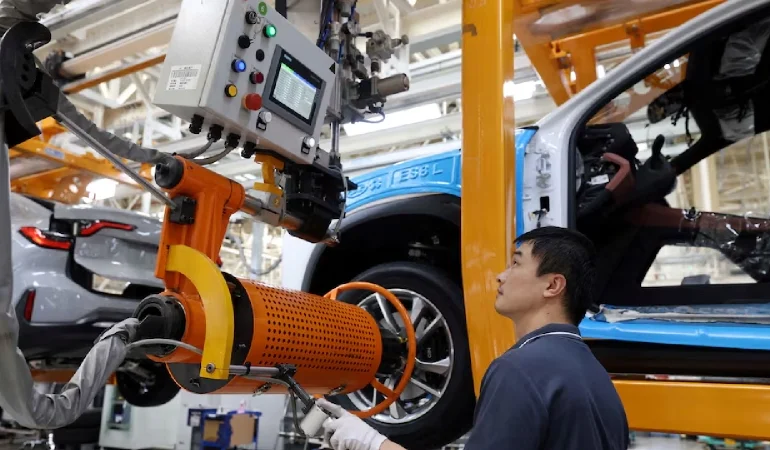
China’s manufacturing sector expanded at its fastest pace in a year in March, offering a temporary boost to an economy navigating global uncertainty and uneven domestic demand. Official data showed the manufacturing purchasing managers index rose to 50.4 from 49.0 in February, moving back into expansion territory and exceeding expectations. The improvement reflects stronger production and new orders following a slower start to the year, signaling a rebound in industrial activity as businesses resumed operations after seasonal disruptions and demand conditions showed signs of stabilization.
The data also pointed to broader improvement across the economy, with the non manufacturing PMI, which includes services and construction, rising to 50.1 from 49.5. Sub indexes for output and new orders both climbed above the key 50 threshold, indicating renewed momentum in production and demand. Export related activity also improved, although it remained slightly below expansion levels, highlighting ongoing pressure from external markets. The rebound follows a prolonged period of contraction through much of the previous year, suggesting that recent policy support and global demand for Chinese goods are beginning to show measurable effects.
Despite the stronger headline figures, rising costs are emerging as a key concern for manufacturers. Input prices increased sharply, driven by higher commodity costs and increased procurement activity, while output prices rose at a slower pace, pointing to limited pricing power among producers. This imbalance suggests that profit margins could come under pressure, particularly for export focused firms operating in highly competitive global markets. Analysts note that the recovery may also have been influenced by post holiday production catch up, which could distort the sustainability of the current growth trend.
Geopolitical tensions, particularly the ongoing conflict in the Middle East, are adding a new layer of uncertainty to the outlook. Higher energy prices linked to the conflict are expected to increase production costs and disrupt supply chains, creating additional challenges for businesses already dealing with weak domestic consumption. Economists warn that prolonged instability could weigh on global growth, affecting demand for Chinese exports and increasing the risk of slower expansion in the months ahead. Industries with strong export exposure, including automotive and electronics, may face additional pressure if external conditions deteriorate.
While early year economic activity has exceeded expectations and may support growth targets for the first quarter, the path forward remains uncertain as policymakers balance short term recovery with longer term structural adjustments. Efforts to shift the economy toward domestic consumption continue, but progress remains gradual. As global conditions evolve and cost pressures build, businesses and investors are closely watching whether the current rebound can be sustained or whether external shocks will begin to slow momentum in the second half of the year.