China’s humanoid robot race accelerates as factories prepare for large scale production
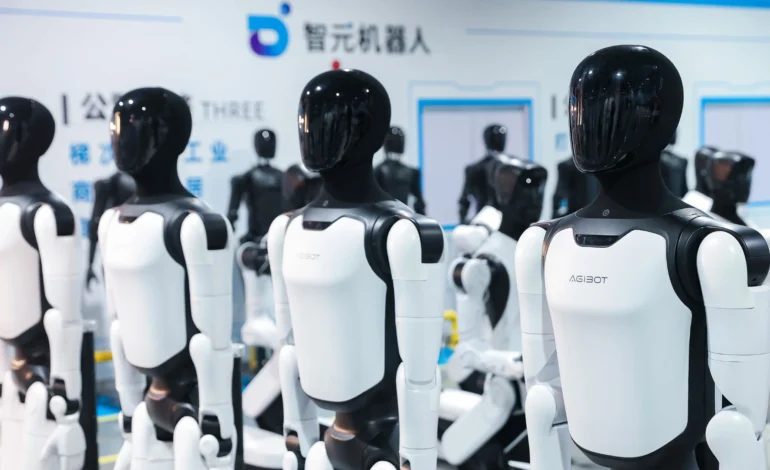
China is rapidly advancing its push into humanoid robotics, with manufacturers moving beyond prototypes toward early stage mass production plans. Several companies are now focusing on building robots that can perform repetitive industrial tasks, particularly in factories facing labor shortages and rising operational costs. These machines are being designed to mimic human movement, allowing them to work alongside existing infrastructure without the need for major redesigns. The shift reflects a deeper strategy where automation is not just about efficiency but about maintaining economic competitiveness in a changing global manufacturing landscape.
The latest developments show strong integration between artificial intelligence and mechanical engineering. These humanoid robots are equipped with vision systems, motion control algorithms, and adaptive learning capabilities that allow them to handle tasks such as sorting, assembly, and quality inspection. Unlike traditional industrial robots that operate in fixed positions, humanoid models are being trained to navigate dynamic environments, making them more versatile for real world applications. This flexibility is expected to play a critical role in sectors where customization and rapid production changes are becoming the norm.
From an economic perspective, the rise of humanoid robotics is closely tied to labor market pressures. As wages increase and demographic shifts reduce the available workforce, companies are turning to automation to maintain productivity. The initial cost of these robots remains high, but manufacturers are betting that economies of scale will bring prices down over time. This creates a long term investment cycle where early adopters gain efficiency advantages while the broader market gradually transitions toward automated operations.
China’s strong supply chain ecosystem is a key factor supporting this growth. The country has built a comprehensive network of component suppliers, including sensors, processors, and battery systems, which allows companies to iterate quickly and reduce production costs. This ecosystem is not limited to robotics alone but extends across industries such as electric vehicles and consumer electronics, creating a shared technological foundation. As a result, advancements in one sector often accelerate progress in another, reinforcing the overall pace of innovation.
Globally, the competition in humanoid robotics is intensifying, with companies in the United States, Japan, and Europe also investing heavily in similar technologies. However, China’s approach emphasizes scalability and integration with existing manufacturing systems, giving it a unique position in the race. The ability to deploy these robots at scale could reshape global supply chains, as production becomes less dependent on human labor and more driven by automated systems.
Looking ahead, the success of humanoid robots will depend on their reliability, cost efficiency, and ability to adapt to different industries. If these challenges are addressed, the technology could redefine how factories operate, creating a new balance between human workers and machines. This transformation is likely to influence not only industrial productivity but also broader economic structures, as countries compete to lead in the next wave of automation.