China’s Low Cost Electric Vehicles to Adopt Lidar Technology Once Reserved for Luxury Cars
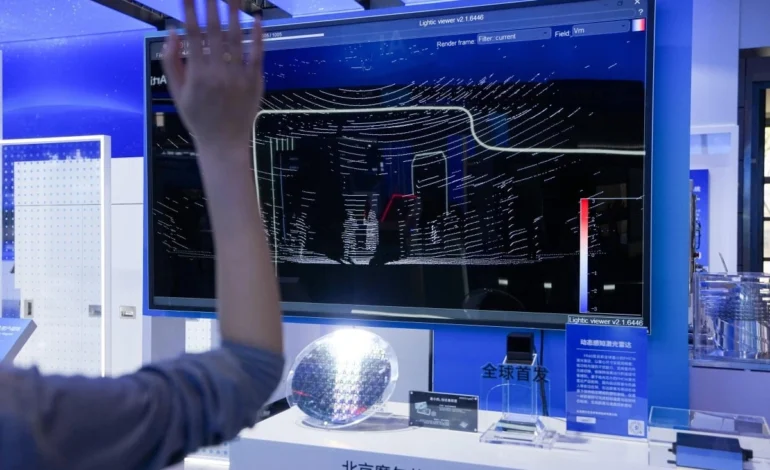
China is accelerating the expansion of advanced automotive technology by introducing lidar based intelligent driving systems into low-cost electric vehicles, marking a significant shift in the country’s rapidly evolving EV market. The development reflects intensifying competition among manufacturers as they race to differentiate products while production costs continue to decline.
Lidar technology, which uses light detection and ranging systems to map surroundings with high precision, has traditionally been limited to premium and luxury vehicles due to its high manufacturing cost. It plays a critical role in advanced driver assistance systems by improving object detection and navigation accuracy, especially in challenging conditions such as fog, rain, or low visibility environments.
According to industry insights from AI driven technology firm Robosense, lidar systems could soon be integrated into electric vehicles priced as low as 60,000 yuan, approximately 8,795 US dollars. This represents one of the lowest price points globally for vehicles equipped with such advanced autonomous driving hardware, excluding ultra low cost mini vehicles that sit below 50,000 yuan.
The shift highlights a broader transformation within China’s electric vehicle sector, where technological features once considered premium are increasingly becoming standard. As government incentives phase out and competition intensifies, automakers are focusing on innovation, cost efficiency, and smart driving capabilities to maintain market share both domestically and internationally.
Experts suggest that widespread adoption of lidar in lower priced vehicles could significantly accelerate the democratization of autonomous driving technology. By reducing cost barriers, manufacturers aim to bring advanced safety and navigation systems to a much larger segment of consumers, potentially reshaping expectations for entry level electric vehicles.