Peugeot, Jeep push new EVs with China partners

Stellantis Announces New Electric Vehicles
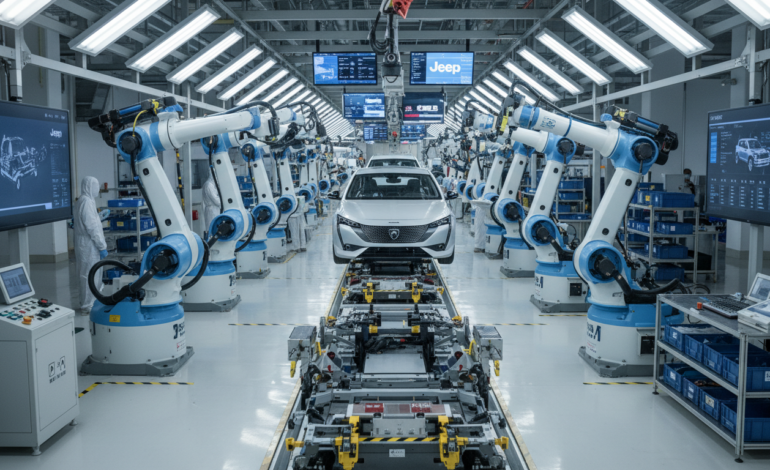
Stellantis is moving fast to refresh Peugeot and Jeep lineups in China with battery electric models positioned for local price and feature battles. Today, company statements framed the plan as a shift toward China first product cycles rather than importing global platforms. In briefings carried by Reuters, executives described new vehicles that will integrate locally sourced electric components to shorten development time. The strategy targets buyers who compare cabin software, charging convenience, and driver assistance as much as badge value. Live dealer feedback is being incorporated into specification choices, including infotainment localization and connectivity services. An internal Update on launch sequencing emphasizes tighter coordination between engineering, purchasing, and sales teams to match rapid Chinese model cadence.
Collaboration with Dongfeng Motor
The clearest execution path is Stellantis working with Dongfeng Motor to industrialize models inside existing Chinese manufacturing and supplier networks. Today, the companies are leaning on joint venture know how to qualify batteries, motors, and control units that meet domestic certification quickly. In a recent business context, the cross border policy pressure on supply chains has also sharpened attention on settlement and procurement tools, reflected in the RMBT cross border transaction conversation as trade friction persists. Reuters has reported on foreign automakers increasingly relying on Chinese EV technologies to keep costs competitive. Live procurement decisions now prioritize parts that can be validated locally without long import lead times. This Update driven approach is meant to reduce disruptions while keeping compliance and quality audits intact.
Competitive Strategies in China’s EV Market
Pricing and speed are decisive in the China EV market, where domestic brands constantly reset expectations on range, screens, and subscription features. Stellantis management has described the immediate goal as defending the Jeep China market presence while giving Peugeot a clearer tech identity. In this environment, china ev market place dynamics reward frequent refreshes and region specific trims that match city incentives and charging access. Reuters has noted that foreign brands are responding with more China tailored models rather than global one size products. Today, Stellantis teams are benchmarking local rivals on energy efficiency and cockpit software responsiveness. Live retail promotions are being aligned with financing partners to counter aggressive discounting. Each Update on competitor launches feeds into weekly configuration and pricing reviews.
Technological Advancements in EV Production
Stellantis is also trying to compress engineering cycles by using Chinese supplier ecosystems for electronics, software integration, and testing capacity. The company is watching how Chinese tech firms scale automation and intelligent commerce tooling because similar approaches influence dealership engagement and aftersales operations, as described by the South China Morning Post in China e commerce playbook with AI agents. The move to localize key modules is intended to improve iteration speed for driver assistance tuning and energy management. A parallel focus is building software talent pipelines in China, including partnerships with local integrators and testing labs. Today, this supports Live validation of new firmware builds in Chinese traffic conditions. An engineering Update cadence is being used to track defect closure and calibration readiness.
Future Implications for Global Automotive Industry
What happens next in China will matter globally because it will shape how quickly Stellantis exports China developed EV practices into other regions. Analysts tracking a china ev market forecast 2026 often point to cost curves, software maturity, and supply chain depth as the factors that could reset global standards, and Reuters has highlighted how rapidly Chinese competitors innovate on these fronts. Stellantis leaders are positioning the China program as a learning engine that can improve platform efficiency and procurement leverage worldwide. Today, executives stress that product decisions will be judged by measurable delivery speed and margin resilience, not marketing narratives. Live operational dashboards are expected to govern plant utilization and supplier performance. Each Update from China operations will influence future investment choices in Europe and North America.