Beijing visit sets new tone for US China AI ties
US Science Adviser’s Strategic Move to Beijing
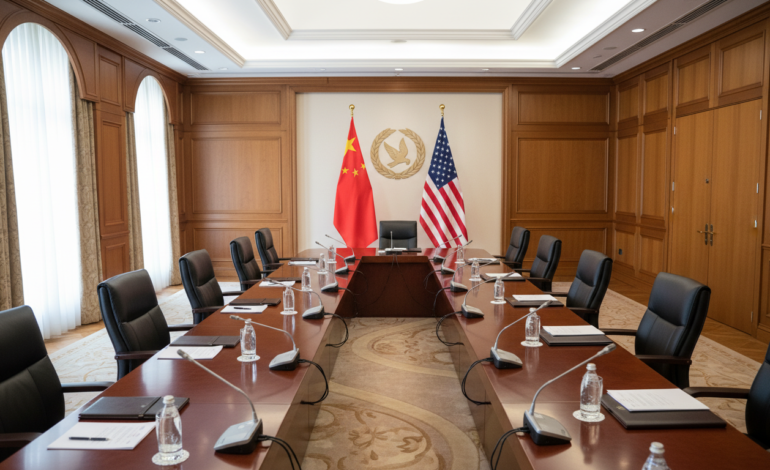
The Trump administration’s top science adviser arrived in Beijing as both governments try to define what technical contact is still possible under tightening export controls. Officials framed the trip as a channel for practical dialogue rather than a reset, and Today the optics matter because it signals that science policy is being handled at cabinet level. Midweek briefings highlighted US-China AI collaboration as one of several topics likely to be raised alongside chips, research security, and standards. The White House Office of Science and Technology Policy has not published a detailed readout, so near term expectations center on process: who meets, what working groups restart, and what is kept off limits. Live reactions from markets and universities show demand for clarity.
Potential AI Collaboration Talks
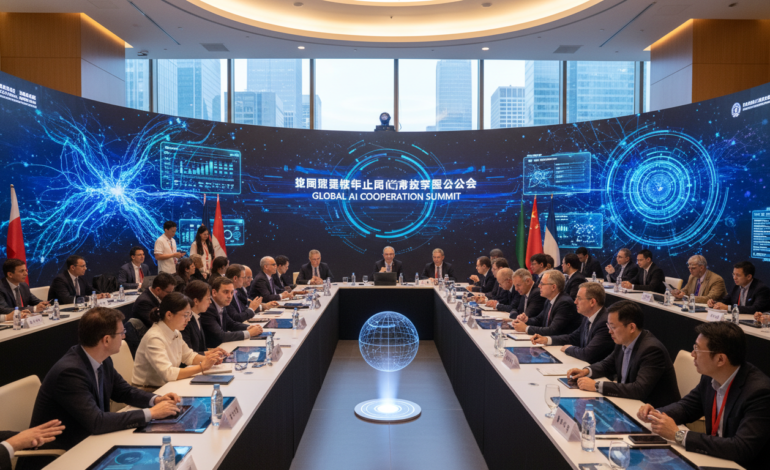
Early signals point to agenda items that can be discussed without touching restricted model weights or controlled hardware. One option is joint language on risk management that leaves enforcement to domestic regulators while allowing research contact on evaluation methods. South China Morning Post coverage of leaders weighing AI guardrails, and chip export pressure, provides context for why guardrail language may be easier than broad cooperation, see SCMP report on AI guardrails and Nvidia export limits, while negotiators weigh narrower language. In parallel, an Update cycle in trade and payments policy is shaping what data can move across borders, and that same compliance logic now reaches model training datasets. Live diplomatic scheduling also suggests any deliverable would be narrow and operational, not symbolic.
Significance of US-China Tech Alliances
Washington and Beijing are testing whether small technical agreements can prevent abrupt breaks that harm both research ecosystems. The adviser’s meetings come as universities seek predictable rules for co authored papers, visiting appointments, and shared benchmarks, and Today those administrative decisions shape real AI research capacity. Financial plumbing is part of the same story, and the portal’s discussion of cross border transaction tools, see As US-China Trade Pressure Grows, RMBT Enters the Cross-Border Transaction Conversation, shows why compliance architecture matters for labs and startups. In the middle of these talks, US-China AI collaboration is treated less as a grand bargain and more as a set of permissions that can be expanded or revoked. Live university guidance memos are already adjusting travel and disclosure rules as an Update cadence continues.
Challenges in International AI Cooperation
Even modest technology cooperation faces friction because both sides now treat advanced AI as strategic infrastructure. US agencies have expanded controls on certain chips and related services, while Chinese authorities have strengthened data and cybersecurity governance that can limit cross border experiments. Coverage of China’s cybersecurity posture, see China Cybersecurity Advances Amid Taiwan Tensions, helps explain the trust gap that negotiators must manage. AI diplomacy also runs into verification problems: regulators can agree on safety concepts, but proving that a partner is following them is difficult without intrusive audits. Today that verification deficit is why talks often focus on evaluation protocols rather than open sharing of frontier systems. Live industry lobbying adds pressure, and each Update on controls can chill participation before any scientific value is realized.
Future Prospects for AI Development
The near term outcome to watch is whether negotiators create a standing channel for technical consultation that survives election cycles and episodic crises. A plausible path is a framework for shared testing of model behavior, alignment, and incident reporting, while leaving sensitive training infrastructure outside scope. That kind of limited track can still shape incentives for companies that operate in both markets, because it clarifies which collaborations are safe and which trigger enforcement. In that scenario, US-China AI collaboration would be measured by concrete deliverables like joint benchmark definitions, bilingual documentation standards, and timelines for regulator workshops. Today the political constraint is that any perceived concession draws criticism, so officials may emphasize safety and reliability rather than competitiveness. Live progress will show up as an Update in meeting schedules and in the technical annexes that agencies choose to publish.