China, US Set AI Governance Dialogue Amid Tensions
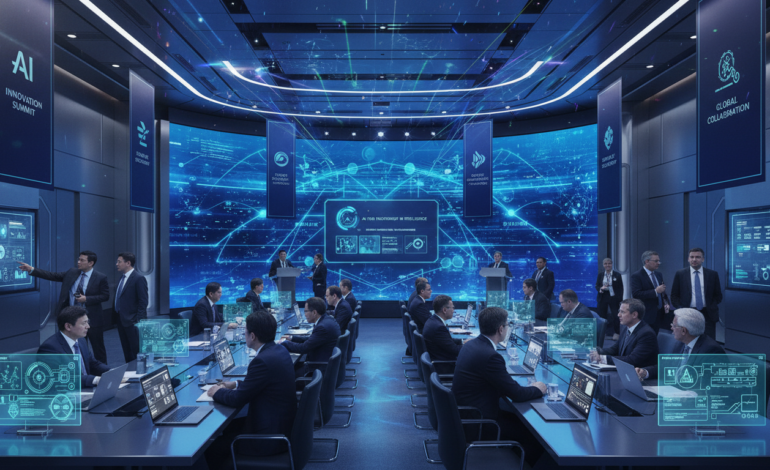
China and US Agree to Formal AI Talks
Beijing confirmed Today that it will hold a dialogue with Washington focused on artificial intelligence governance, framing it as a structured channel rather than an ad hoc exchange. In the announcement, China’s Foreign Ministry described the engagement as part of ongoing communication on technology related issues, and it also keeps US-China relations from being defined only by export controls. The plan comes as officials on both sides seek clearer guardrails for safety, standards, and cross border impacts. Live attention is likely to center on whether both governments can align on baseline terminology and risk categories without reopening broader disputes. The first step is procedural, but it signals intent to keep talks regular.
Context of Recent State Discussions
The new round follows earlier state level contacts that laid groundwork for technical consultations, and an Update from Beijing emphasized that the dialogue will focus on governance rather than commercial deals. China’s Foreign Ministry spokesperson said the two sides would communicate on AI governance issues, according to a transcript posted by the ministry. In parallel, debates about advanced computing supply chains continue, and the South China Morning Post detailed industry expectations in AMD CEO meeting with China vice premier. The same diplomatic calendar also includes regional security exchanges, reflected in China urges US Iran talks as Hormuz risk rises. Live scheduling will depend on working level availability.
Implications for Global AI Policies in US-China relations
Even a narrow discussion can influence how other capitals draft rules, because many firms build products for multiple jurisdictions and need interoperability. Regulators in Europe and Asia are watching for whether US-China relations can produce shared language on model evaluation, incident reporting, and accountability for developers and deployers. The governance focus also touches enterprise procurement, where ai governance software and ai governance tools are increasingly used to document training data lineage and model behavior. Today, compliance teams want predictable expectations, not shifting demands that vary by market. For policy makers, a key question is whether the dialogue yields common risk tiers that can be mapped to national laws. The talks could also set norms for scientific cooperation under defined constraints.
Expected Outcomes of the Dialogue
Officials are expected to prioritize practical deliverables, including definitions, contact points, and mechanisms for timely communication when systems cause harm. A realistic near term outcome is a shared template for evaluating high impact models, which would help companies align internal governance with government expectations. In an Update to related ethics debates, coverage of institutional frameworks such as AI ethics on dignity initiative shows how non state actors are shaping language that governments may borrow. The dialogue may also address documentation practices for audits, including what evidence is acceptable when using third party ai governance tools. Live operational issues, like reporting security vulnerabilities to the other side, are likely to be discussed cautiously. Any joint text would probably be principles, not binding commitments.
Future Prospects for AI Collaboration
Future collaboration will depend on whether the channel survives political shocks and whether both sides can separate safety coordination from competition in markets and research, including between Beijing and Washington. If the dialogue becomes regular, it could support cooperation on technical standards bodies and on shared measurement methods for robustness and misuse. Another path is limited coordination on academic exchanges and benchmark development, where transparency can reduce misunderstanding. For US-China relations, the larger test is whether governance conversations can continue even as restrictions on advanced chips and cloud access remain contested. Today, many multinational firms operate with split compliance regimes, and Live uncertainty raises costs. An Update in this area would be a calendar of follow up meetings and working groups, which would signal that both governments see value in predictable engagement.