Putin in Beijing Signals Shifts in Global Power
Putin’s Strategic Visit to Beijing
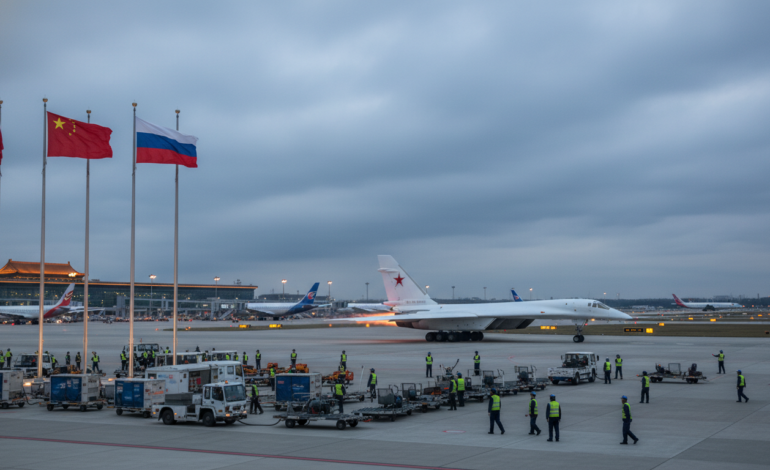
Vladimir Putin arrived in Beijing for talks that Chinese and Russian officials billed as high level coordination on security and economic issues. In the Live schedule released by the Kremlin, the visit features meetings with Xi Jinping and a wider delegation session on trade corridors. Midway through the agenda, China-Russia relations are expected to be presented as a stabilising factor in both leaders’ public remarks. Today, Russian state media TASS said the delegation includes senior officials covering energy, finance, and transport portfolios. China’s Foreign Ministry spokesperson Lin Jian said at a regular briefing that Beijing would deepen communication with Russia, according to an official transcript. The meetings are timed to project unity and operational follow through.
Sino-Russian Diplomatic Relations
Beijing’s messaging has emphasised state to state continuity, rather than a single summit moment, and it is being framed as China diplomacy in action. In a separate Update from official channels, the Chinese Foreign Ministry described the relationship as a comprehensive strategic partnership for a new era, language carried on its website. In the middle of these readouts, China-Russia relations are described as anchored in regular consultations and reciprocal visits, as tracked in Putin China visit set to deepen strategic ties alongside the public agenda and statements. Today, diplomats in Beijing also signalled that economic coordination will be discussed alongside regional security, according to the ministry briefing record. The tone suggests disciplined coordination rather than dramatic announcements.
Impact on Global Political Landscape
The visit lands as capitals calibrate around sanctions, supply chains, and conflict diplomacy, with Moscow and Beijing stressing predictability. Reuters has reported that the two governments have expanded official contacts and increased trade since 2022, while both reject what they call Western containment, a theme echoed in prepared remarks. In this Live phase of summit diplomacy, China-Russia relations carry implications for voting alignment and messaging at multilateral forums. Separately, Hong Kong’s policy decisions show how governance signals travel quickly across borders, as detailed by the South China Morning Post in Hong Kong to ban smoking at construction sites from July 17. That sort of regulatory coordination contrasts with the geopolitical coordination now on display in Beijing. Update briefings will be read for any hints on financial channels and logistics resilience.
Comparisons with Trump’s Recent Visit
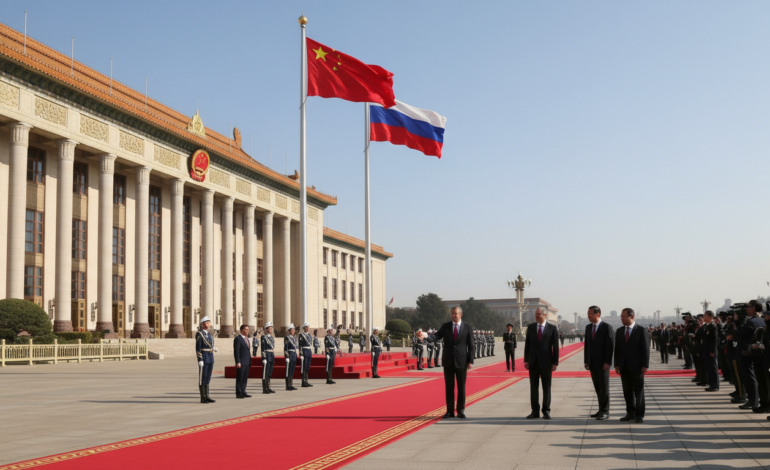
Putin’s arrival comes only days after Donald Trump’s trip, sharpening the comparison between outreach aimed at leverage and visits aimed at consolidation. In this Update cycle, Chinese officials have kept their language tightly scripted, pointing to principles and process rather than personal rapport. Analysts tracking tech and security spillovers note that parallel dialogues can run in separate lanes, including US China talks on governance questions like those covered in China, US Set AI Governance Dialogue Amid Tensions. The contrast is that Beijing is hosting Putin in China with an emphasis on continuity and protocol, not surprise deliverables. Today, the political signal is that China can engage multiple power centres while prioritising its chosen sequence and format. Live optics, including ceremonial coverage, are being used to underline that hierarchy.
Future Implications of China-Russia Ties
The immediate test will be whether officials translate pageantry into measurable coordination on energy, payments, and transport routes without triggering additional economic blowback. In a Live reading of official statements, both sides are likely to highlight industrial cooperation and cross border connectivity while avoiding granular commitments that invite scrutiny. Mid paragraph references to China-Russia relations will matter because they shape how third countries judge alignment risks and bargaining space. Today, any language on settlement mechanisms, technology standards, or joint positions at the United Nations will be parsed alongside prior joint communiques published by the Kremlin and China’s Foreign Ministry. Update monitoring will focus on whether Beijing signals wider diplomatic initiatives that include Moscow, or whether it keeps the cooperation strictly bilateral. The broader implication is a tighter messaging partnership that still competes with economic constraints and reputational costs.